
 Powered by Google
Description
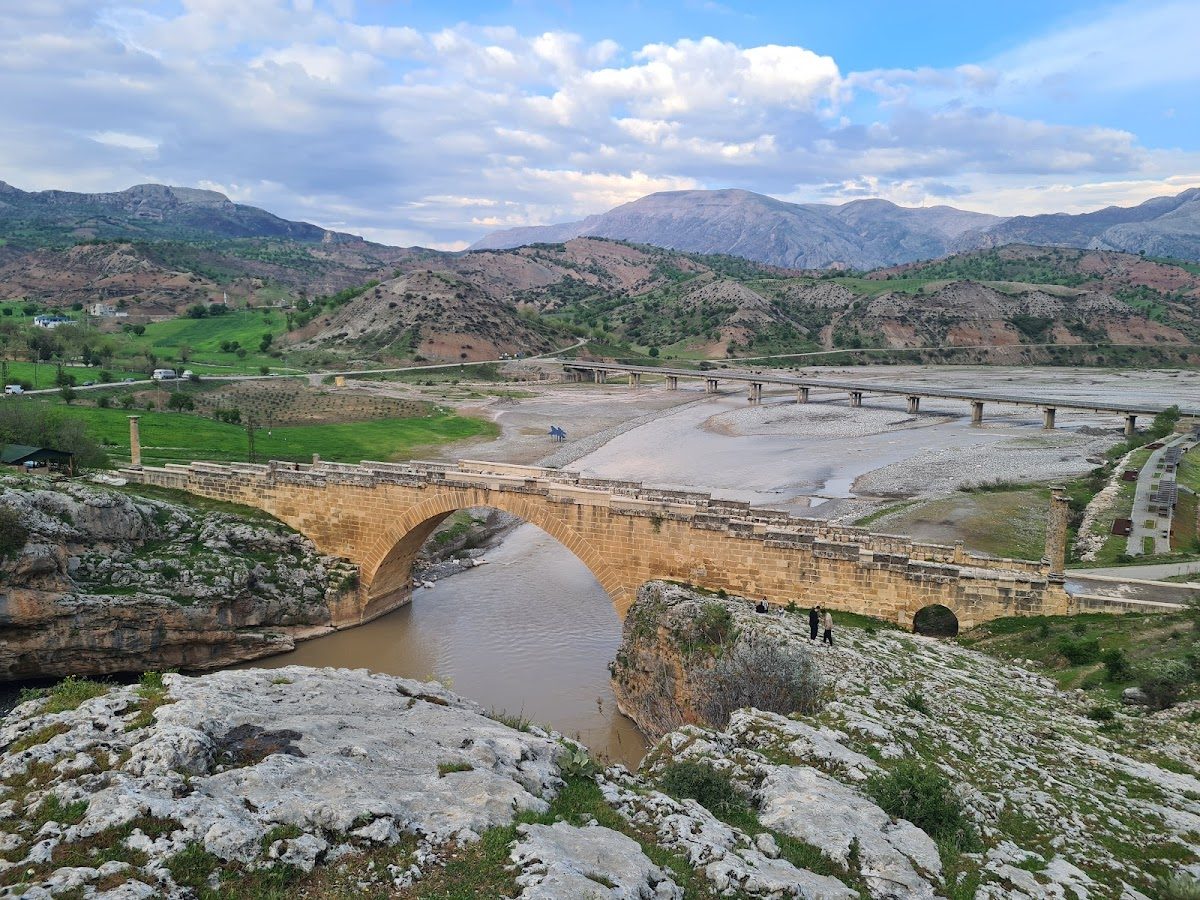
One of the best-preserved examples of ancient Roman roads, a single-arched monumental stone bridge.
Story
Cendere Bridge is a unique structure located over the Kahta River (anciently known as Chabinas) that showcases the engineering genius of the Roman Empire. The bridge was constructed in the late 2nd century AD during the reign of Emperor Septimius Severus (AD 193–211). It is part of Severus's efforts to strengthen the military and commercial routes in the region following the annexation of the Kingdom of Commagene into the Roman Empire. The bridge is 120 meters long, 7 meters wide, and features a single large arch, making it one of the most solid and aesthetically pleasing bridges of its time. At both ends of the bridge, there were four monumental columns (Honorary Columns) erected to honor the emperor and his family. Today, only three of these columns remain; the fourth, which held the statue of the emperor's wife, Julia Domna, was destroyed at a later date. The bridge continued to be used throughout the Middle Ages and beyond, undergoing repairs during the Seljuk and Ottoman periods, which attests to its ongoing significance in the region's history. The magnificent single arch of the bridge, along with the Kahta River flowing beneath it and the surrounding natural landscape, has made it one of the most visited historical sites in Adıyaman.
Visit Tips
- The entrance to the bridge is free and open all day.
- Vehicle passage over the bridge is prohibited; a modern bridge has been built right next to it.
- It is possible to cool off in the Kahta River just below the bridge in the summer.
- It is on the route to Mount Nemrut; a break must be taken while going to Nemrut.