
 Powered by Google
Description
The Roman Period Ancient Theater in Ankara Ulus is an important archaeological structure that reveals the rich history of the city.
Story
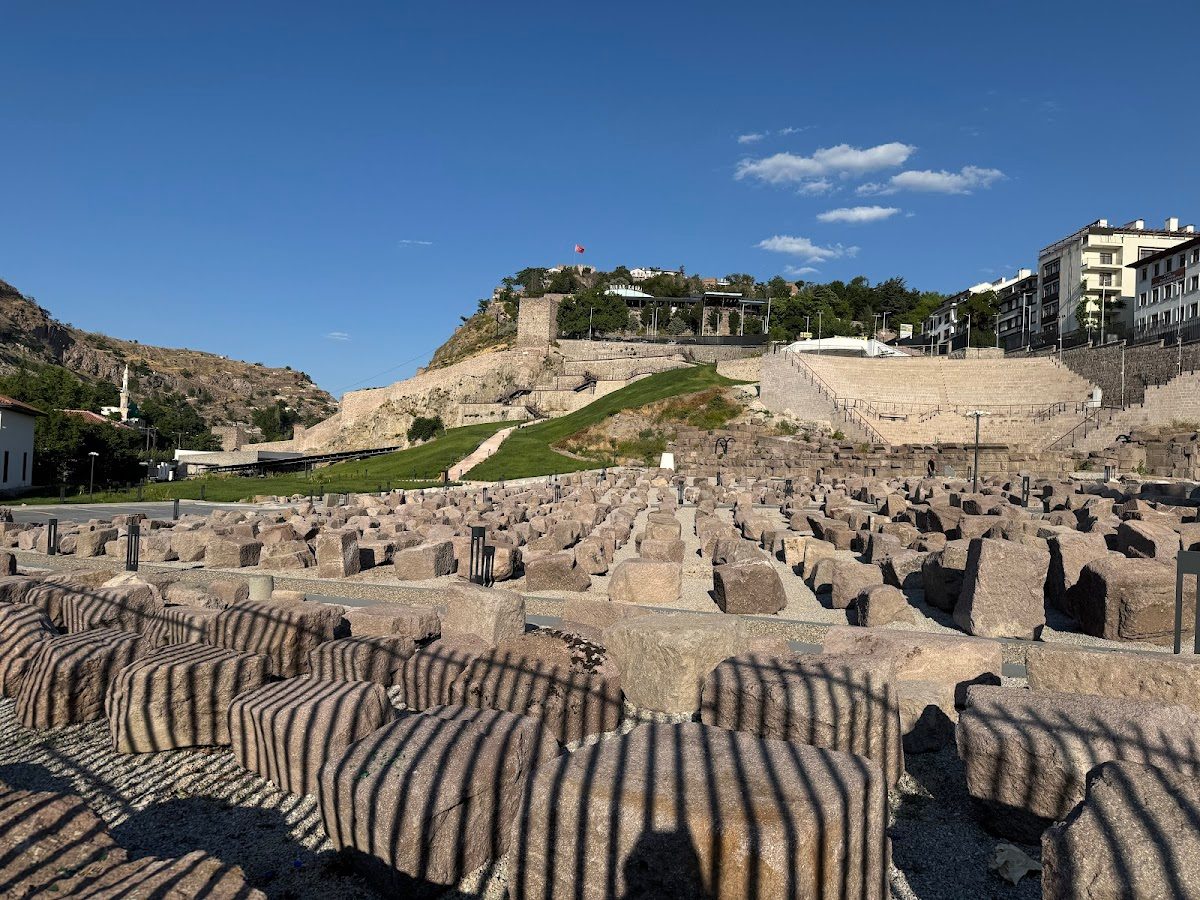
Located in the Ulus district of Ankara, the Roman Period Ancient Theater is one of the most important archaeological remains that shed light on the deep-rooted past of the capital. Believed to have been built in the 2nd century AD, this theater is an indicator of the Roman Empire's presence in Ankara and the city's cultural vitality during that period. Estimated to have a capacity of approximately 15,000 people, the theater hosted gladiatorial fights, theatrical plays, and various public performances at that time. The theater, which remained buried and forgotten for many years, was brought to light with excavation works that began in 1982. These excavations proved that Ankara was not just a Seljuk or Ottoman city, but also an important center during the Roman period. The architecture of the theater bears the typical characteristics of Roman period theater structures; the semi-circular seating rows (cavea), the stage building (scaenae frons), and the orchestra area (orchestra) are clearly visible. However, since a large part of the theater has not yet been restored, it may be difficult to imagine the entire structure. Ongoing restoration and conservation efforts aim to transfer this important structure to future generations…
Visit Tips
- The best time to visit the theater is early in the morning or in the afternoon when crowds are smaller.
- It is advisable to wear comfortable shoes when walking in the area, as the excavation site may have uneven surfaces.
- Don't forget to use a hat and sunscreen on sunny days, as shaded areas in the open space may be limited.
- You can better understand the history of the region by visiting other historical structures around the theater (Roman Bath, Temple of Augustus).
- You can learn more about the history and architectural features of the theater by reading the information panels while exploring the area.