
 Powered by Google
Description
Located in Altındağ, Ankara, Karacabey Mosque and Imaret is an important early Ottoman complex that combines worship with social charity functions.
Story
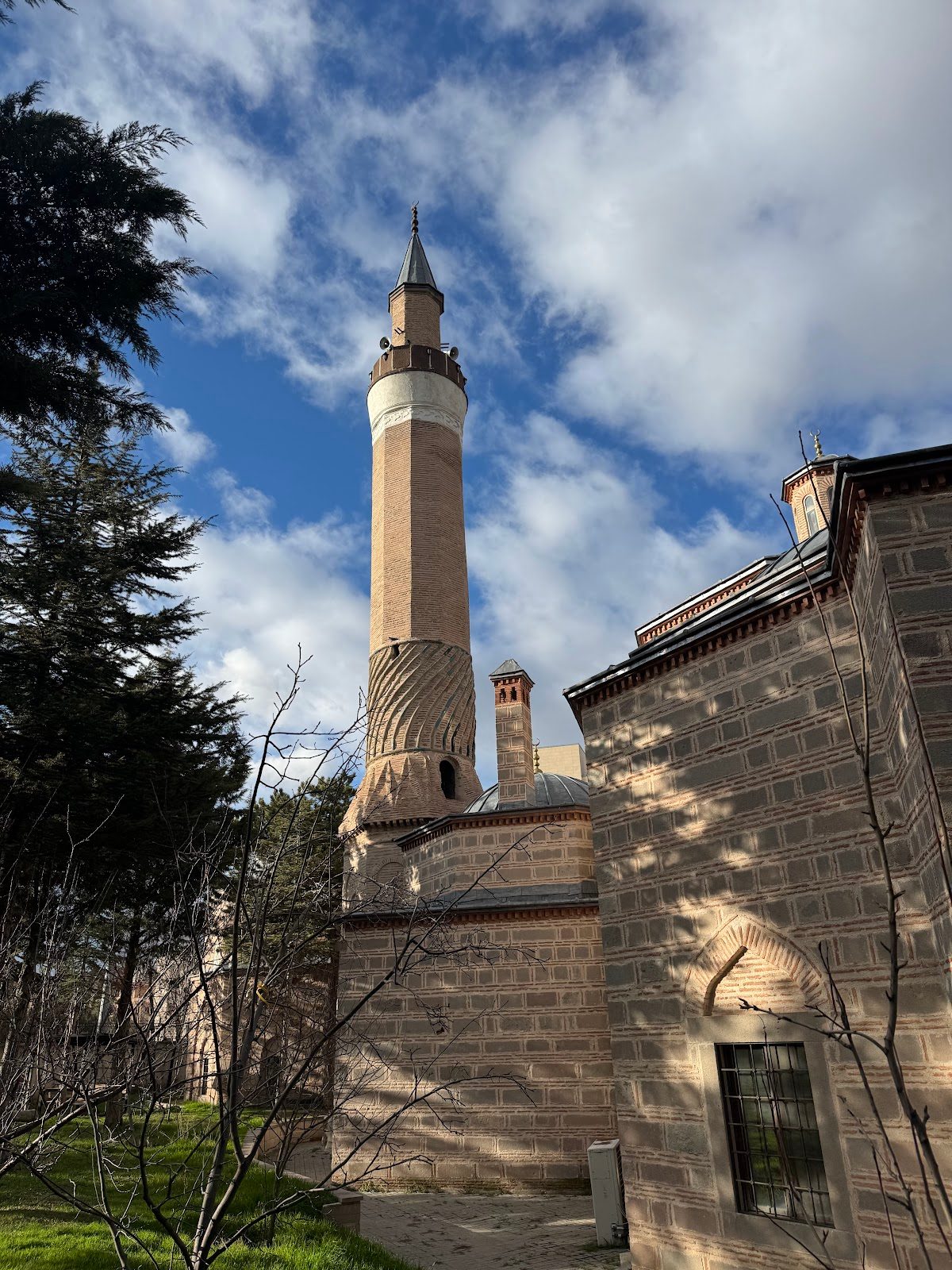
Located in Ankara’s Altındağ district, close to the citadel and the old urban fabric, Karacabey Mosque and Imaret is one of the most important monuments that preserve the city’s early Ottoman heritage. Named after its founder Karacabey, the complex has long served not only as a place of worship but also as a point of charity and gathering thanks to its imaret, where food was distributed to the poor. The construction of the complex dates back to the 15th century, to the years when Ankara had become firmly integrated into Ottoman rule. At that time, Ankara was developing as an Inner Anatolian city at the crossroads of trade routes, and benefactors sought to leave lasting marks by commissioning complexes composed of mosques and imarets. Karacabey Mosque is a product of this mentality: on one side a mosque where local residents perform daily prayers and gather for Friday and holiday services, on the other an imaret that once offered hot meals to travelers, dervishes, and those in need. Architecturally, the mosque reflects the modest yet well-balanced lines of the early Ottoman style. From the outside, one notices a solid mass where finely cut stone and brickwork are used together, free of excessive ornamentation yet clearly built to endure. Inside, plasterwork and painted decorations running along the walls have been partially renewed during later restorations, but they still echo the aesthetic sensibilities of the first period. Its single-balcony minaret leaves a humble mark on Altındağ’s skyline, adding its call to prayer to the historic atmosphere of the neighborhood each morning and evening. The imaret section, although no longer functioning exactly as it once did, is still highly revealing for anyone seeking to understand Ottoman social life through its courtyard layout and spatial organization. In the area where cauldrons used to boil and caravans of travelers once rested, visitors can almost imagine the murmur of crowds, the clatter of copper plates, and the smell of freshly cooked soup rising between the stone walls. The complex embodies not only Karacabey’s personal charitable initiative but also the Ottoman notion of solidarity shaped around the institution of the “waqf.” Today, those who visit Karacabey Mosque and Imaret walk through Altındağ’s narrow streets and almost feel as if they are traveling back in time. While the mosque is quite lively on Fridays and religious holidays, on quiet weekdays it is possible to pray or simply sit and listen to the stillness of the interior. Late afternoon, when sunlight filters through the windows and gently illuminates the mihrab, is one of the best times for photography and for absorbing the atmosphere. During your visit, you come to realize that the building is more than stone and mortar; it carries the traces of people who prayed, ate, and stayed here over the centuries. Standing in the courtyard and looking up at the minaret, you can see how this silent witness from the past still stands amid Ankara’s modern skyline, adding another layer of depth to the city. Karacabey Mosque and Imaret is a quiet stop in the busy capital, offering both spiritual calm and a tangible connection to history.
Visit Tips
- When visiting Karacabey Mosque and Imaret, prefer the morning hours; during this time, the crowds are fewer, and you can enjoy the peaceful atmosphere of the mosque.
- Take a camera with you to examine the architectural details of the mosque; every corner is beautifully worth photographing.
- When visiting the Imaret, seek support from local guides to gather information about the social assistance functions; this will enrich your experience.
- After your visit, take a tea or coffee break at one of the nearby cafes; this way, you can interact with the locals and gain a better understanding of the region's culture.