
 Powered by Google
Description
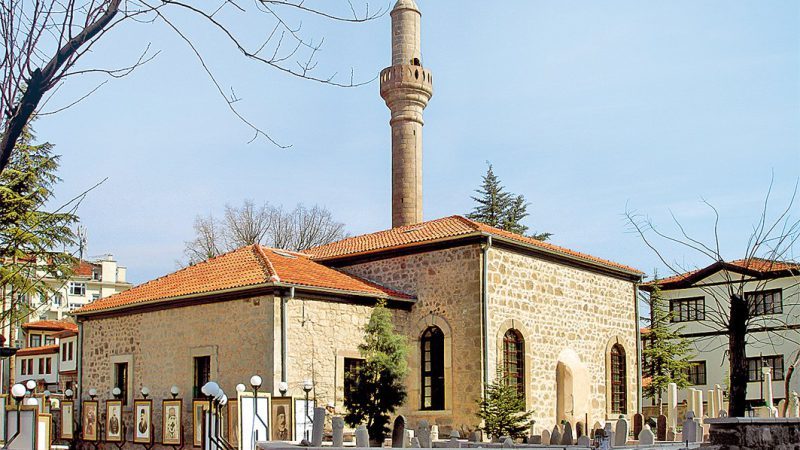
Taceddin Lodge and Mausoleum is a historic Sufi complex in Ankara’s Altındağ district, known as the place where Mehmet Akif Ersoy wrote the Turkish National Anthem.
Story
As you climb up through the narrow streets of Altındağ, a modest courtyard leaning against the slopes of Ankara Castle appears before you. In the very center of this courtyard stands Taceddin Lodge and Mausoleum, a place that looks simple at first glance yet carries remarkably powerful memories. From the outside, it may resemble an ordinary Sufi lodge building, but in reality it is a silent witness both to the Ottoman spiritual tradition and to the turbulent years in which modern Turkey was born. The origins of the complex go back to its use during the Ottoman period as a dervish lodge and place of worship. With its timber lines, tile roof, low stone walls and small windows, it reflects a modest architectural style that fits naturally into the old urban fabric of Ankara. Stepping inside, the first sensation is a break from the city’s noise and a subtle shift in time. The faint creaking of the wooden floorboards, the calligraphic panels on the walls and the understated decorations that recall old tekkes allow visitors to establish a vivid connection with the past. What makes Taceddin Lodge truly special is, without doubt, its link with Mehmet Akif Ersoy. During the years of the War of Independence, when Akif came to Ankara, he stayed here for a period, and it was in this lodge that he wrote the Turkish National Anthem, the İstiklal Marşı. Today, the room where he lived is carefully preserved inside the complex, arranged almost like a small museum with his personal belongings, writing desk and explanations about his working environment. This room does not only present a poet’s corner of study; it also conveys the atmosphere of deprivation, hope and determination that marked the war years. Adjacent to the lodge is the mausoleum, containing the grave attributed to Taceddin Sultan as well as other historical burials. The coffins covered with green cloths are enclosed by plain marble work. Here, one can feel both the spiritual past of the lodge and the moral climate that accompanied the foundation of the Republic. The site gains particular significance on national holidays and on the anniversary of the adoption of the National Anthem, when it becomes a place of quiet visits and commemorative ceremonies. Today, Taceddin Lodge and Mausoleum is often overshadowed by the city’s busy boulevards and monumental state buildings, yet for those who seek it out, it leaves a deep and lasting impression. Visitors encounter not merely a Sufi complex, but a fragment of national memory, the subtle bridge between literature and history, and a strong spiritual atmosphere concealed within unassuming architecture.
Visit Tips
- When visiting the Taceddin Dergah, don't forget to take a walk to explore the historical texture around it; this area has a rich cultural heritage.
- Pay attention to the visiting hours; the tomb is usually quieter in the early morning hours and offers a spiritual experience.
- Make sure to move quietly and respectfully in order to better feel the atmosphere inside the Dergah.
- You can get information about guided tours to explore other historical sites nearby; this will help make your visit more efficient.