
 Powered by Google
Description
It is an ancient city famous for its magnificent ruins from the Hellenistic and Roman periods.
Story
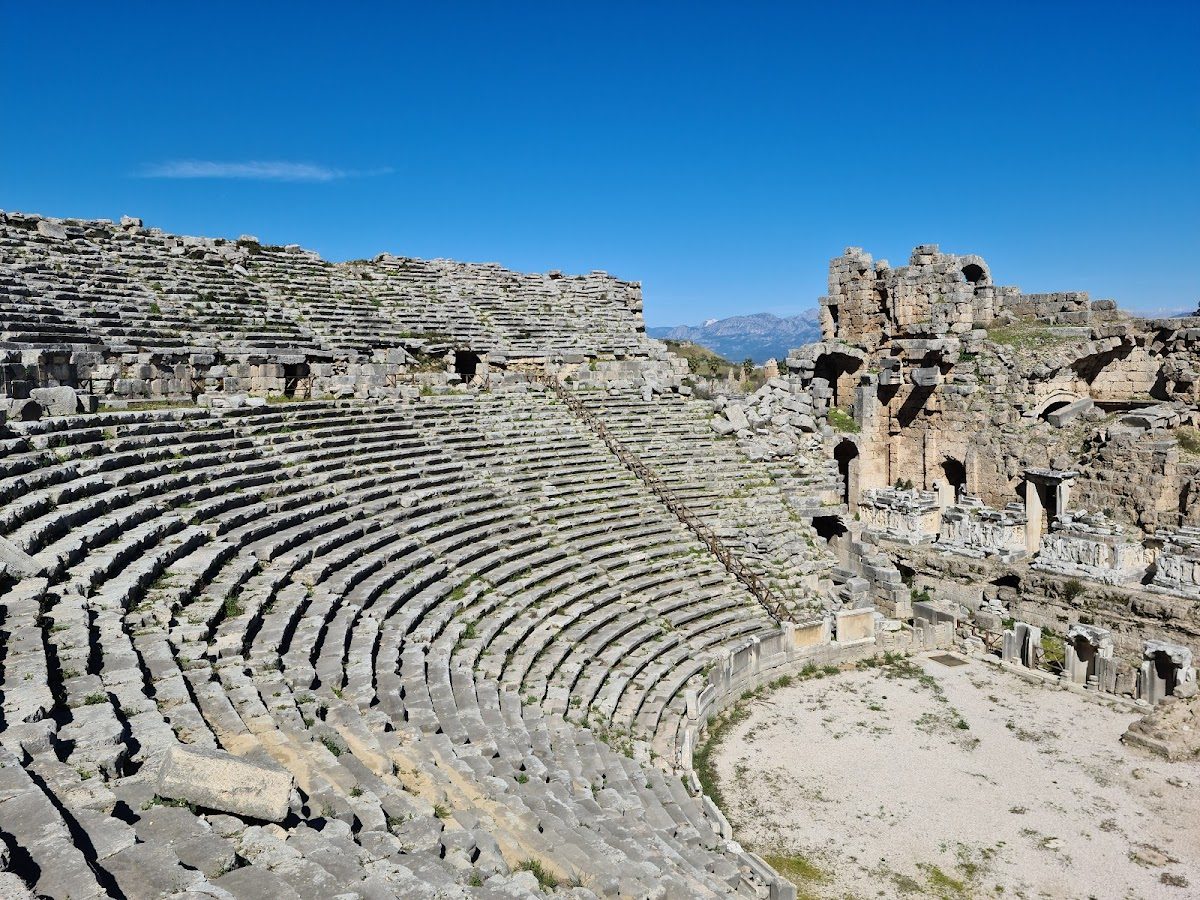
Perge Ancient City is known as one of the most important cities in the Pamphylia region and has a rich historical layer that extends from the Hellenistic period to the Roman period. The founding of the city dates back to the 2nd millennium BC; however, it experienced its most brilliant period following Alexander the Great's campaign in Anatolia. Perge became one of the most advanced settlements of its time with its planned urban layout, columned streets, bath complex, and massive stadium. One of the most significant figures of the city is the world-famous female mathematician and sculptor Akantha, who is said to have made substantial contributions to Perge's cultural fabric. Ancient sources also emphasize that Perge was a center of science and art in the region. The city is also one of the important stops during Saint Paul's travels in Anatolia. During the Roman Empire, the expanding city bore the splendor of a typical Mediterranean port city with its aqueducts, fountains, and agora layout. One of the most impressive areas of Perge is the stadium, which has a capacity of 12,000 people. Today, a large portion of the seating steps remains intact. According to legend, the founding of Perge was carried out by the daughters of heroes fleeing the Trojan War. For this reason, the city has become associated with a female culture, and a strong temple tradition dedicated to the goddess Artemis has developed. Excavations are still ongoing today, and new findings are uncovered every year.
Visit Tips
- Open between 08:00 and 19:00, until 17:00 during the winter period.
- Museum card is valid.
- The morning hours are calmer.
- It has a large parking lot.