
 Powered by Google
Description
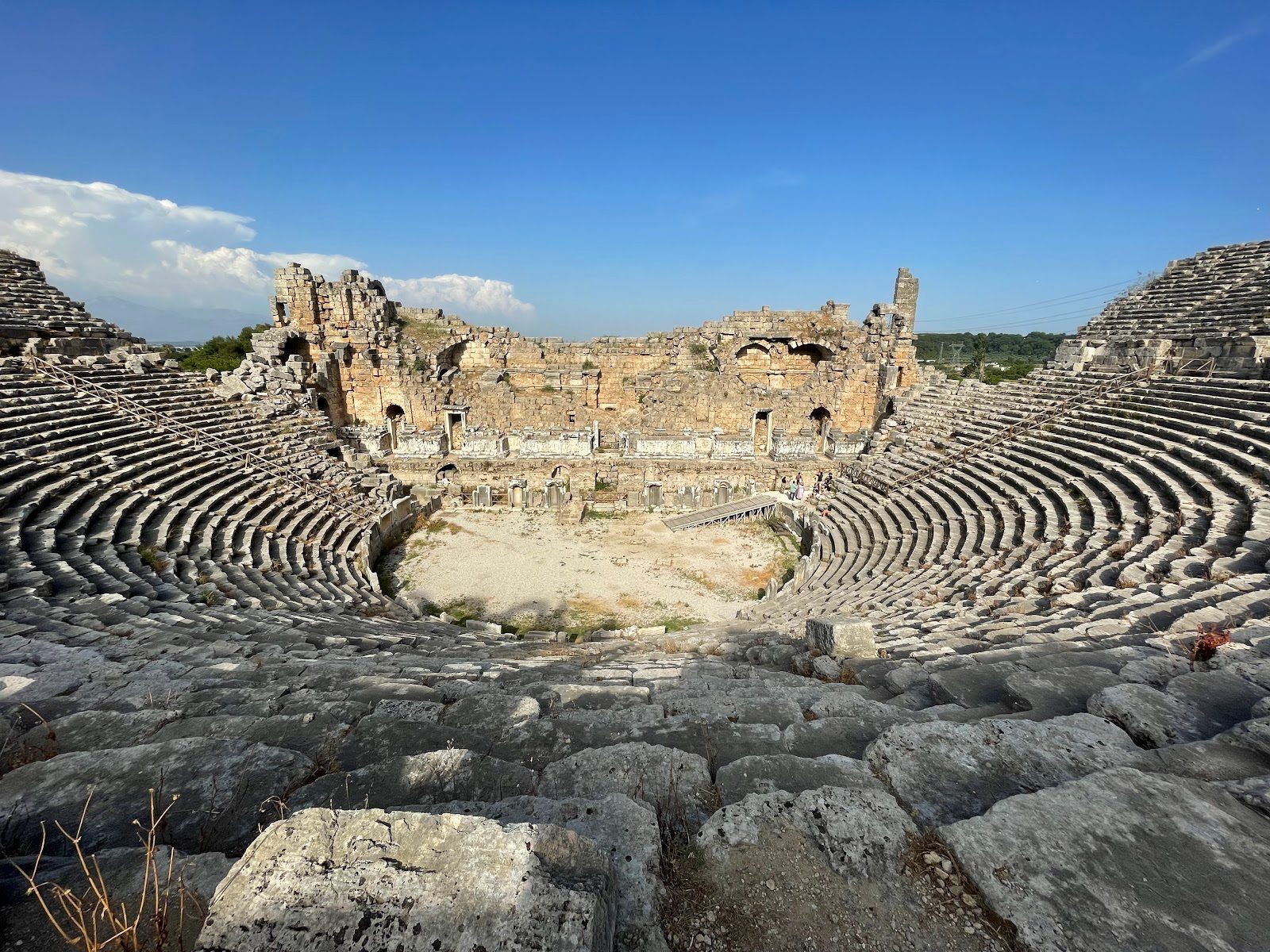
The theatre, one of the significant structures of the ancient city of Perge, was at the center of the city's social and cultural life.
Story
Perge Theatre is one of the most magnificent structures of the ancient city of Perge, located in the Aksu district of Antalya. Believed to have been built in the 2nd century AD, the theatre bears the architectural characteristics of the Roman period. Estimated to have a seating capacity of approximately 12,000 to 15,000 spectators, this structure hosted various performances in ancient times, including theatrical plays and gladiatorial contests. The stage building (scaenae frons) of the theatre is adorned with rich sculptural works and reliefs, reflecting the artistic understanding of its era. It is known that the stage building had three stories, with statues of gods and emperors in its niches. The seating rows (cavea) consist of three main sections and were designed for spectators to comfortably watch performances. The orchestra area, located at the lower part of the theatre, was later used as an arena for gladiatorial contests. This transformation indicates that the purpose of the theatre's use changed over time. With its surviving ruins, Perge Theatre provides important information about the engineering and artistic understanding of the ancient period. Thanks to excavation and restoration works, many parts of the theatre have been brought to light...
Visit Tips
- Wear comfortable shoes when visiting the theatre, as there are steps and uneven surfaces.
- Especially in summer, remember to bring a hat, sunglasses, and water, as the theatre is an open area and shaded spots are limited.
- Take your time to examine the detailed reliefs and sculptures in the theatre's stage building.
- Climb to the upper parts of the theatre to enjoy panoramic views of the ancient city and its surroundings.
- Allocate enough time to visit other important structures of the Ancient City of Perge (stadium, agora, baths).