
 Powered by Google
Description
It is one of the largest cities of Lycia and is on the UNESCO World Heritage List.
Story
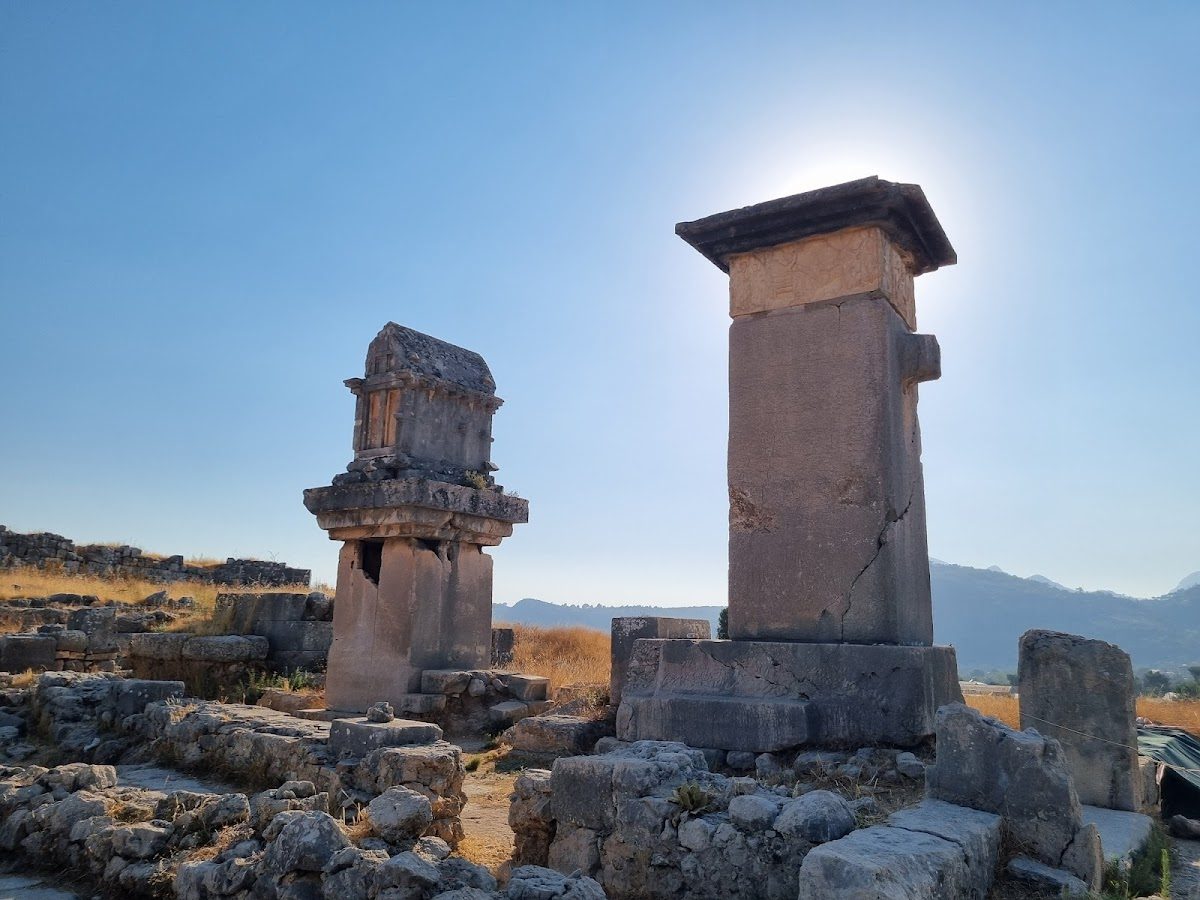
Xanthos Ancient City is a historic city that is listed as a UNESCO World Heritage Site and is one of the most powerful political centers of the Lycian civilization. The Lycian people's passion for independence and their warrior character are often mentioned in ancient texts for their heroism. There are two significant mass suicide events in the history of Xanthos: one during the Persian invasion and the other while fighting against the Romans. The Lycians preferred to set their city on fire and die rather than surrender; this event resonated greatly in the ancient world. Among the most striking structures in the city are the Nereid Monument, the Harpy Tomb, and the massive theater. Although the reliefs on the Harpy Tomb are currently exhibited in the British Museum in London, they showcase Xanthos's unique artistic understanding. The city maintained its importance during the Roman period and became a wealthy administrative center. Xanthos is also a focal point of religious life along with Letoon. The inscriptions of Xanthos played a significant role in deciphering the Lycian language; these inscriptions form the building blocks of one of the oldest languages in Anatolia. Today, visitors can almost feel the dramatic stories of the past as they walk along the ancient streets. With its vast necropolis area and acropolis remains, Xanthos is an open-air museum that history enthusiasts must see.
Visit Tips
- It is open between 08:00 and 19:00.
- Access is restricted in sensitive areas because it is a UNESCO site.
- Entry is paid, Müzekart is accepted.
- It gets very hot in the summer, it is recommended to go in the morning.