
 Powered by Google
Description
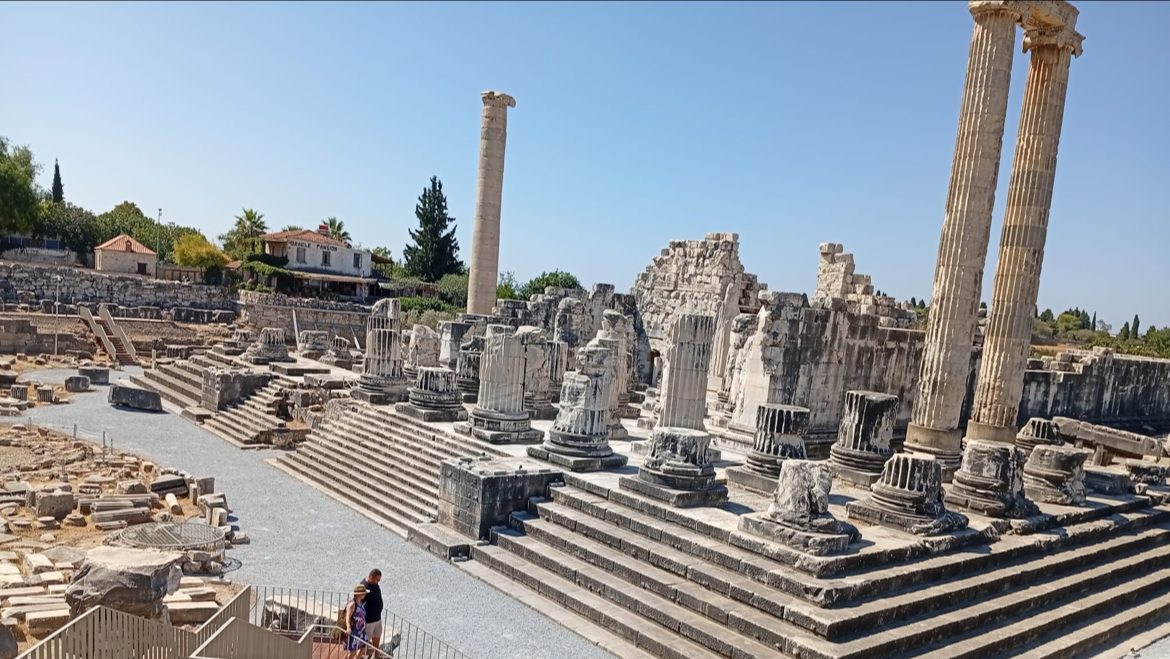
The Temple of Apollo in Didim is one of the largest and most impressive temples of the ancient world.
Story
The Temple of Apollo in Didim is located in Didyma, one of the most important oracle centers of the ancient world. This sacred site, with a history dating back to the 8th century BC, became one of the largest temples in Ionia, especially in the 6th century BC. Although it was destroyed during the Persian invasion, reconstruction began after Alexander the Great conquered the region. This reconstruction process, which started in the late 4th century BC during the Hellenistic period, allowed the temple to reach colossal dimensions. The temple has a dipteral plan, surrounded by a double row of columns. It was planned to have more than 120 columns, each approximately 19.5 meters high, but its construction was never completed. One of the most striking features of the temple is the sacred courtyard (adyton) within it, and the statue of Apollo and the oracle well located there. The architecture of the temple exhibits one of the finest examples of the Ionic order, dazzling with its detailed reliefs, friezes, and column capitals. The temple maintained its importance during the Roman Empire, but with the spread of Christianity, it was gradually abandoned and destroyed by earthquakes. Today, the remaining s...
Visit Tips
- The best time to visit the temple is early morning or late afternoon to avoid crowds and the hot weather.
- Don't forget to bring essentials like sunscreen, a hat, and water, especially during summer when the weather can be quite hot.
- Wear comfortable shoes to better explore the ancient ruins and details around the temple.
- To better understand the history and architecture of the temple, you can take a guided tour or read the informative panels.
- You can also include other important archaeological sites in your visit plan, such as the nearby ancient cities of Miletus and Priene.