
 Powered by Google
Description
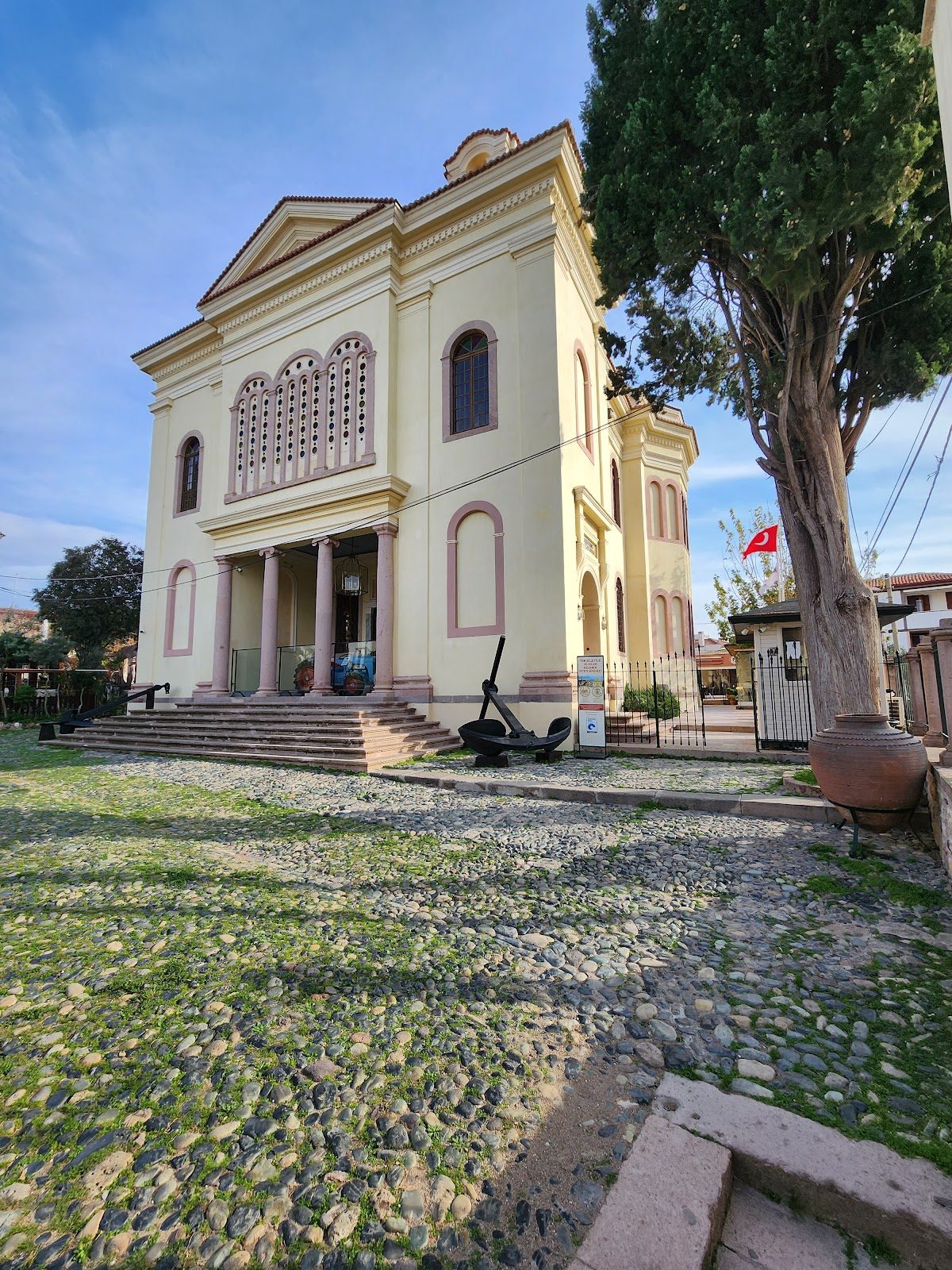
Cunda Taksiyarhis Church is an impressive 19th‑century Greek Orthodox church restored as the Rahmi M. Koç Museum, showcasing industrial and maritime collections.
Story
As you walk through the stone-paved streets of Cunda Island, a gentle incline suddenly opens onto a monumental structure rising before you: Cunda Taksiyarhis Church. Built in the late 19th century by the local Greek Orthodox community, the church is dedicated to the archangels Michael and Gabriel, considered celestial protectors. At that time, Ayvalık and Cunda formed a vibrant cultural and commercial bridge between the two shores of the Aegean, and this building embodied the community’s prosperity and confidence in stone. After the population exchange between Türkiye and Greece, the congregation left the island and the church was abandoned for decades. The bell tower collapsed, interior decorations were heavily damaged, and the roof leaked, yet the thick stone walls, arched windows and high ceiling continued to preserve the traces of former splendor even in a ruined state. In the early 21st century, the Rahmi M. Koç Museum and Cultural Foundation led a comprehensive restoration. From structural reinforcement to the conservation of surviving fresco fragments, a series of careful interventions brought the building back to life. Today, when you step through the door, you enter not only a former house of worship but also an industrial and maritime museum. Old wooden boats, lighthouse components, machine engines, measuring instruments, nostalgic toys and everyday objects are displayed in the nave and the galleries. As daylight filters between the stone columns and glides across polished metal surfaces, it is hard not to imagine the workshops and harbors where these pieces once labored. One of the most striking aspects of the museum is the balanced coexistence of architectural memory and contemporary museology. Original floor materials have been preserved, and instead of erasing every mark from the walls, conservators deliberately kept some scars visible so that the building’s long journey would remain legible. Thus, while visitors move among the exhibits, they also sense the layered history of a structure that silently witnessed Cunda’s demographic and cultural transformations. Once outside, you notice how the church’s hilltop position commands the view over Cunda’s streets and, in the distance, the shores of Ayvalık. Around sunset, leaving the museum to wander through the island’s narrow lanes and pausing at a café offers a perfect chance to digest what you have seen and heard. Cunda Taksiyarhis Church is not just a pretty shell for photographs; it is a stop that materializes the multi-lingual, multi-faith past of this coastline and gently invites reflection.
Visit Tips
- Before visiting the Cunda Taksiyarhis Church, check the museum hours as it may be closed on certain days.
- Remember that photography is allowed inside the museum, so take your time to capture the best angles.
- Consider making a reservation to enjoy a delicious dining experience at Cunda's unique seafood restaurants after your museum visit.
- It would be beneficial to wear comfortable shoes to explore the historic streets of Cunda by walking around the museum.