
 Powered by Google
Description
The Historical Settlement of Cunda Island (Alibey Island) is Ayvalık’s most characteristic Aegean island, known for its stone mansions, narrow streets and sea-scented squares.
Story
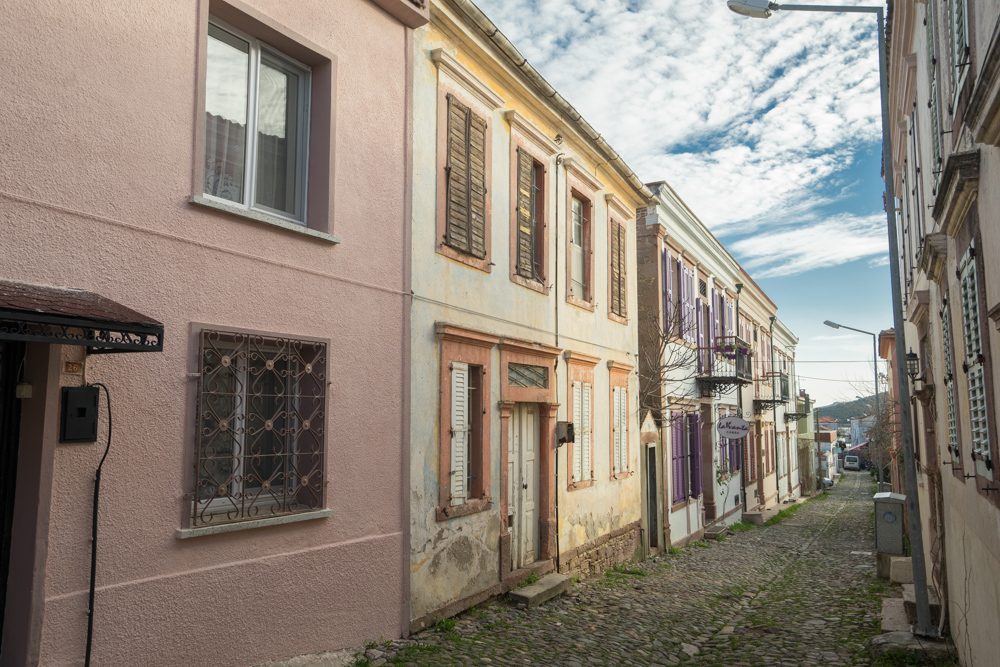
Standing right across the Ayvalık Gulf and connected to the mainland by a small bridge, Cunda Island, officially called Alibey Island, offers a world of its own in the Aegean with its historical settlement. During the Ottoman period it flourished especially with Greek sailors, merchants and olive oil producers, gaining a dense urban fabric of stone mansions, churches and narrow streets. Although it is now part of "modern Turkey", what you truly feel while walking through the historic core is the accumulated sound and scent of centuries. The historical settlement is concentrated on the streets climbing up from the harbour. Thick-walled stone houses with colourful shutters line the alleys; some carefully restored, others standing with weathered façades resisting time. At many doorways you can see traces of old ironwork, pots of geraniums on the steps and cats dozing in the shade. As you wander, you might hear island locals sipping coffee at their doors, speaking in a slow Aegean accent; these everyday sounds blend with the historic architecture to create a vivid atmosphere. One of Cunda’s landmarks is the former Church of Taxiarchis. Restored and reused today as a museum and cultural venue, it reflects the island’s multicultural past. Inside, the high ceiling, marble details and the lingering presence of icons recall how strong the Greek community once was here. When you leave the church and walk further uphill, the streets narrow and the scent of the sea returns with the wind. The squares and harbour area, which can be seen as the heart of the historical settlement, are now enlivened by cafés, taverns and small hotels. Olive-oil based dishes, seafood and mastic-flavoured desserts reinforce the island’s gastronomic identity. At sunset, as you stroll along the harbour, the shadows of the stone houses grow longer on one side while the silhouette of Lesbos appears on the horizon on the other. This view explains why Cunda occupies such a special place in many travellers’ memories. Modern transport connections have made the island easily accessible from Balıkesir and nearby provinces. Nevertheless, while walking in the historical settlement you feel not the speed of cars but the rhythm of footsteps and the island’s calm tempo. The Historical Settlement of Cunda Island offers an Aegean experience where visitors, whether day-trippers or long-stay guests, can live close to history without giving up the comforts of contemporary life.
Visit Tips
- While walking on Cunda Island, pay attention to the architecture of the historic stone mansions; each one tells a unique story.
- Be sure to try seafood at local restaurants, as Cunda is famous for its fresh fish and olive oil-based meze varieties.
- Don't forget to climb to the highest point of Taksiyarhis Church to watch the sunset and see the most beautiful views of the island.
- Don't be afraid to get lost in the narrow streets of Cunda, as every corner may greet you with another beautiful surprise, offering a great opportunity to explore local shops.