
 Powered by Google
Description
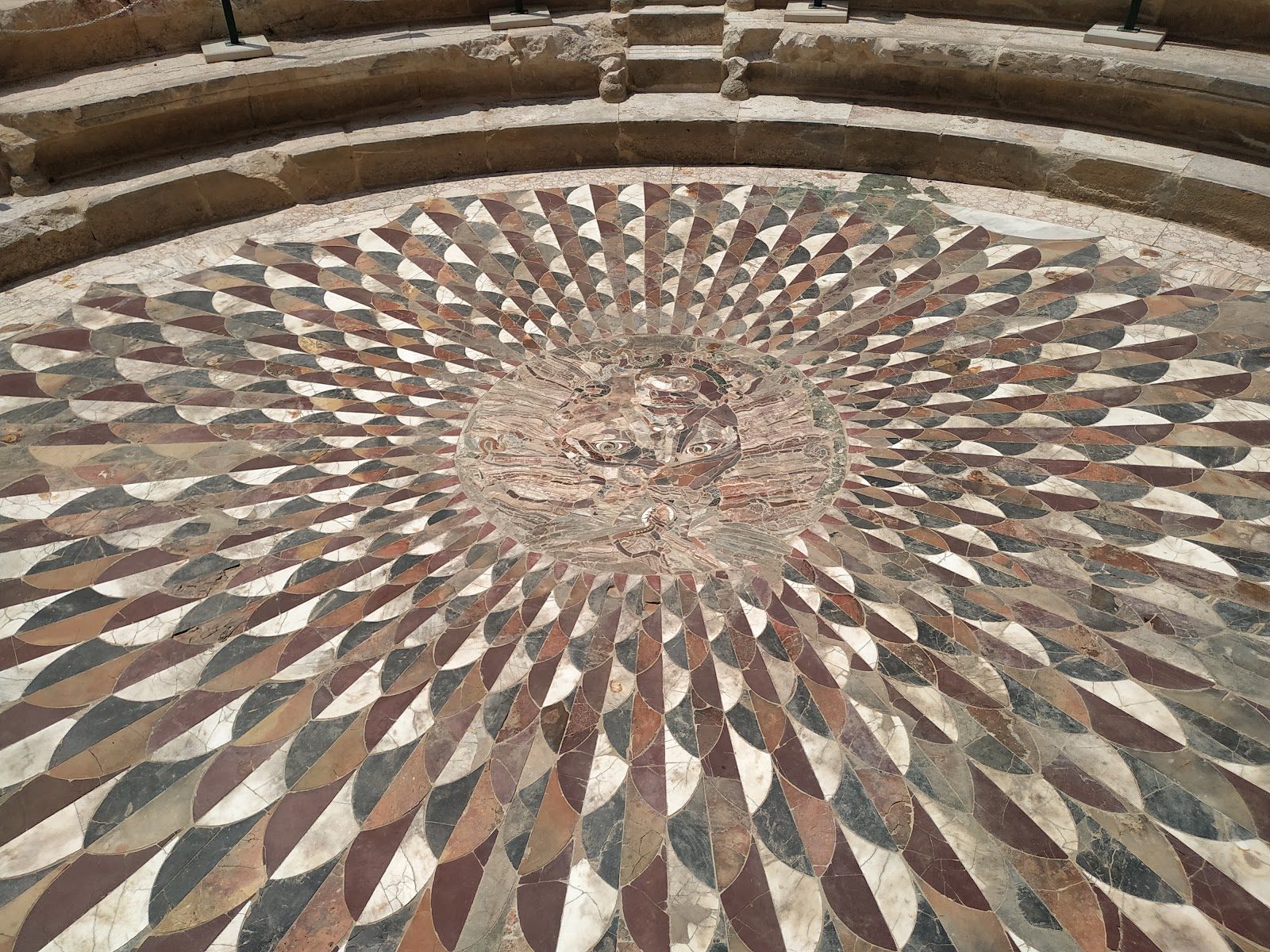
The Medusa Mosaic, located in the Gölhisar district of Burdur, is one of the important remains of the ancient city of Kibyra and a unique work of art from the Roman period.
Story
The Medusa Mosaic was discovered in the Odeon (music house) structure of the ancient city of Kibyra, located in the Gölhisar district of Burdur. Dating back to the mid-2nd century AD, this mosaic showcases the artistic and architectural richness of the Roman Empire period. The mosaic covers an area of approximately 500 square meters, with a stylized depiction of the mythological figure Medusa's head in its center. Around Medusa, there are geometric patterns, floral motifs, and various animal figures. The vividness in Medusa's eyes and the snake details in her hair particularly reflect the mastery of mosaic art of that era. The mosaic was created by skillfully combining small pieces of stone (tesserae) of different colors to create a three-dimensional effect. The Odeon of the ancient city of Kibyra was used not only for music performances but also for important events such as senate meetings and public gatherings. Therefore, the Medusa Mosaic played a central role in the social and cultural life of the city. The mosaic was unearthed during excavations in 2009 and has since become one of the most important archaeological finds in the region.
Visit Tips
- Be sure to see the Medusa Mosaic when visiting the ancient city of Kibyra.
- The mosaic is displayed under a special protective roof, so be careful not to use flash when taking photos.
- Allow enough time to explore other parts of the ancient city, as the mosaic is only one part of it.
- If you are visiting in the summer, remember to use a hat and sunscreen to protect yourself from the sun.
- It is advisable to bring water and snacks with you, as dining options in the area may be limited.