
 Powered by Google
Description
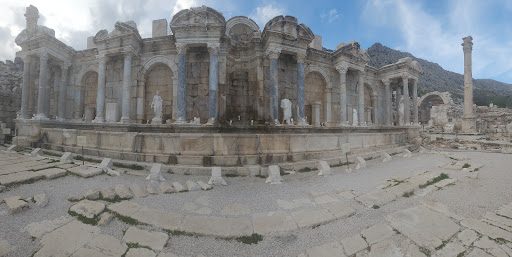
Located in the agora of the ancient city of Sagalassos, the Antonine Nymphaeum is a magnificent example of monumental architecture and water engineering from the Roman Imperial period.
Story
The Antonine Nymphaeum, located in the Lower Agora of the ancient city of Sagalassos, was constructed between 160-180 AD, during the reign of Emperor Marcus Aurelius. This monumental fountain not only met the city's water needs but also attracted attention with its architectural splendor. The fountain featured a two-story facade, enriched with marble craftsmanship and sculptural details. Its facade contained niches with statues of mythological figures and the imperial family. Water cascaded like a waterfall from the upper level of the fountain, offering a visual spectacle. A large pool was situated in front of the fountain, playing a significant role in both water collection and the city's social life. Sagalassos's water system was a complex engineering marvel that brought spring water from the mountains to the city, and the Antonine Nymphaeum was one of its most striking components. Although the fountain was largely destroyed by earthquakes and deterioration over time, extensive restoration efforts by Belgian archaeologists since the late 20th century have largely brought it back to its original grandeur. Today, visitors to Sagalassos can admire the Antonine Nymphaeum...
Visit Tips
- You will need to pay an entrance fee to Sagalassos Ancient City.
- Allow enough time to explore the Lower Agora where the fountain is located, and other surrounding structures.
- If visiting in summer, remember to bring a hat, sunscreen, and plenty of water.
- Choose comfortable walking shoes to explore the entire ancient city.
- Consider joining guided tours to better understand the detailed architecture and restoration work of the fountain.