
 Powered by Google
Description
The Green Tomb is a magnificent mausoleum in Bursa’s Yıldırım district, the final resting place of Ottoman sultan Mehmed I, renowned for its tiles.
Story
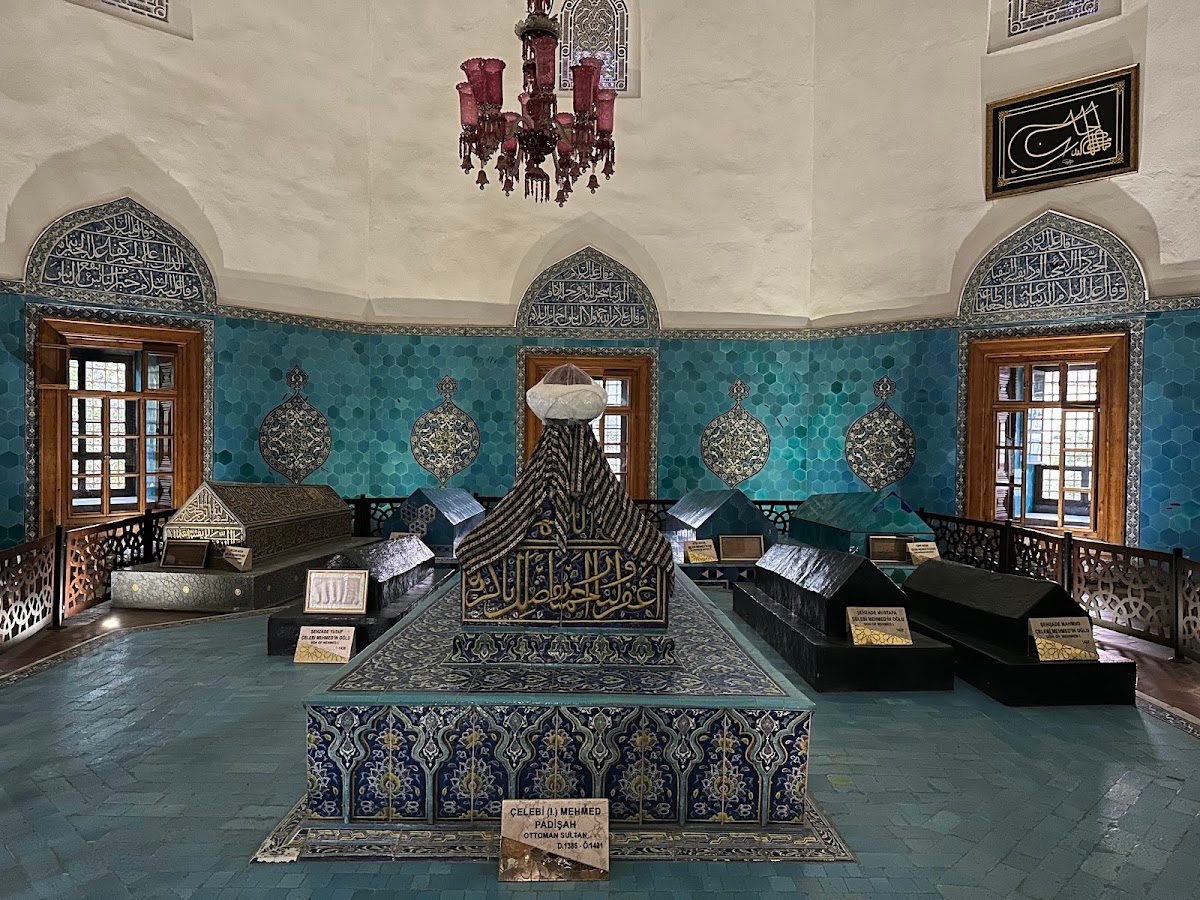
The Green Tomb rises on a hill overlooking Bursa’s Yıldırım district and is regarded as far more than a simple funerary monument; it is one of the defining symbols of the early Ottoman identity. Built in 1421 for Ottoman sultan Mehmed I, who died at a relatively young age, the mausoleum takes its name from the striking green‑turquoise tiles that once fully covered its exterior. This color alludes both to the lush green of the Bursa plain and to the notion of paradise and renewal in the Islamic world of the time. The architect of the structure is Hacı Ivaz Pasha. Its plan follows a traditional type: an octagonal body topped by an inner dome and an outer pyramidal roof. What truly distinguishes the Green Tomb from similar buildings is the quality and richness of its tile decoration. Although many of the exterior tiles have not survived intact, the remaining fragments clearly display the technical mastery of the period. Emerald green, dark blue, and white tones shimmer differently depending on the angle of the sun. Visitors enter the interior through a narrow doorway and are first greeted by a soft semi‑darkness. The large central cenotaph belongs to Mehmed I, while the smaller ones around it are those of princes and family members. The fabrics covering the tombs, the inscription bands, and the fine woodwork reveal how refined the Ottoman sense of aesthetics had already become even before the empire reached its full territorial extent. In several sections of the walls, blue‑and‑white tiles are combined with elegant examples of calligraphy; Qur’anic verses and invocations give the space a profound spiritual depth. One of the most impressive aspects of the visit is the approach to the monument itself. Often explored together with the nearby Green Mosque, the complex is relatively quiet in the early morning; a light breeze carries the rustling of leaves from the trees surrounding the tomb. Looking out over Bursa from the hill, you realize that the Green Tomb is not just the burial place of a sultan, but a silent witness to the Ottoman story—an empire expanding through conquest yet rooting its identity in Anatolia and in this very city. Today, for both locals and visitors, it serves as a place to pause, connect with history, and escape the bustle of the city for a short while. Out of respect, it is important to remain quiet inside, avoid using flash when taking photos, and not disturb those who are praying. Bringing a light jacket can be useful; the interior feels cool even during the summer.
Visit Tips
- Visiting the Yeşil Türbe early in the morning helps you avoid the crowds and allows you to better experience the peaceful atmosphere of the tomb.
- During your visit, don't forget to bring a camera or phone to closely examine the tiles and architectural details inside the tomb; these details are quite impressive.
- You can take a walk in the parks surrounding the tomb to explore the historical fabric of Bursa or take some time to relax in local cafes.
- By planning to visit the other historical sites located next to the Yeşil Türbe, you can explore Bursa's rich cultural heritage in a more comprehensive way.