
 Powered by Google
Description
Located within the Muradiye Complex in Bursa, the Tomb of Murad II is one of the most distinctive examples of Ottoman funerary architecture with its open dome and restrained style.
Story
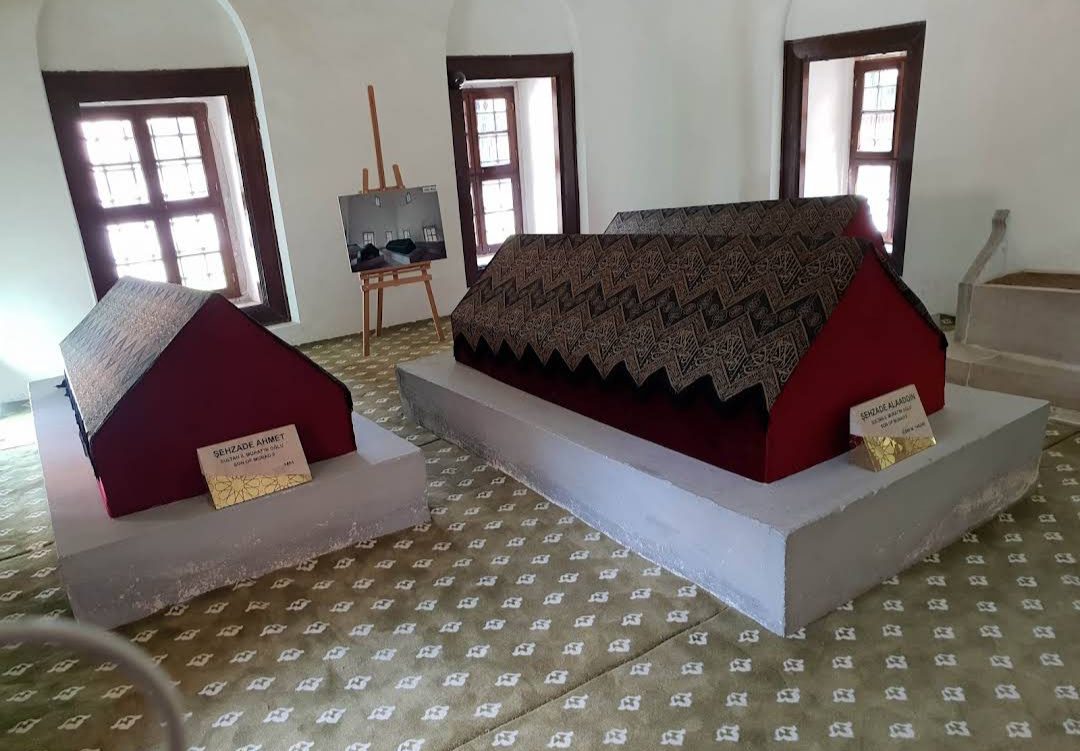
When you step into Bursa’s Muradiye quarter, you are first greeted by the shade of plane trees and then by a deep sense of calm. At the heart of this silence stands the Tomb of Murad II, opening a powerful yet serene page of Ottoman history. Sultan Murad II, who ruled in the 15th century, was one of the rulers who turned Bursa into a true city of monuments. Yet his own tomb is not a monument to dazzling victories, but to a consciously chosen simplicity. Located within the Muradiye Complex, the tomb differs from classical Ottoman mausoleums in one striking detail: it is open to the sky. According to tradition, Murad II requested that his grave not be covered by a dome, so that it would remain exposed to the sky, rain, and wind. This wish symbolizes both his distance from worldly riches and his awareness of human mortality. As you enter the tomb and see the natural light falling directly onto the marble cenotaph, you can feel how this testament still lives on after centuries. Architecturally, the tomb is plain yet full of subtle details. The ashlar stone walls do not compete with elaborate tiles; instead, they guide your gaze straight to the true focus: the sultan’s cenotaph. Arched openings connect the interior with the courtyard, turning the space into a kind of open-air sanctuary filled with the soft sound of the wind, birdsong, and the distant call to prayer. This atmosphere offers visitors not only historical insight but also an inward-looking tranquility. Around the tomb are several other mausoleums belonging to members of the Ottoman dynasty, which is why Muradiye is sometimes called a “necropolis of sultans.” The Tomb of Murad II is like the heart of this ensemble. Many visitors to Bursa first head to grand landmarks such as the Grand Mosque or the Green Tomb, yet once you climb up to Muradiye, you encounter the modest spirit that lies behind Ottoman splendor. Today, those who visit the tomb experience not just the resting place of a sultan, but one of the rare spaces where power and humility meet. Sitting for a while in the courtyard, quietly observing the surroundings, the plain stone walls, and the opening towards the sky allows you to form a small yet powerful connection with the past. For photographers, the site offers images that are free of ostentation but rich in meaning. On Bursa’s historical map, the Tomb of Murad II may appear as a small stop, but for anyone who wants to understand the Ottoman soul, it is a destination of great significance.
Visit Tips
- Before visiting the II. Murad Tomb, you might consider taking a tour with a local guide to learn about the historical and cultural riches of Bursa.
- Pay attention to the visiting hours; the tomb is usually quieter in the early morning hours, allowing you to find a better environment for taking your photos.
- Don't forget to explore the other structures of the Muradiye Complex; the architecture and garden of the complex are beautifully complementary to the atmosphere of the tomb.
- It might be a good idea to have water and a light snack with you, so you can keep your energy up during your visit.