
 Powered by Google
Description
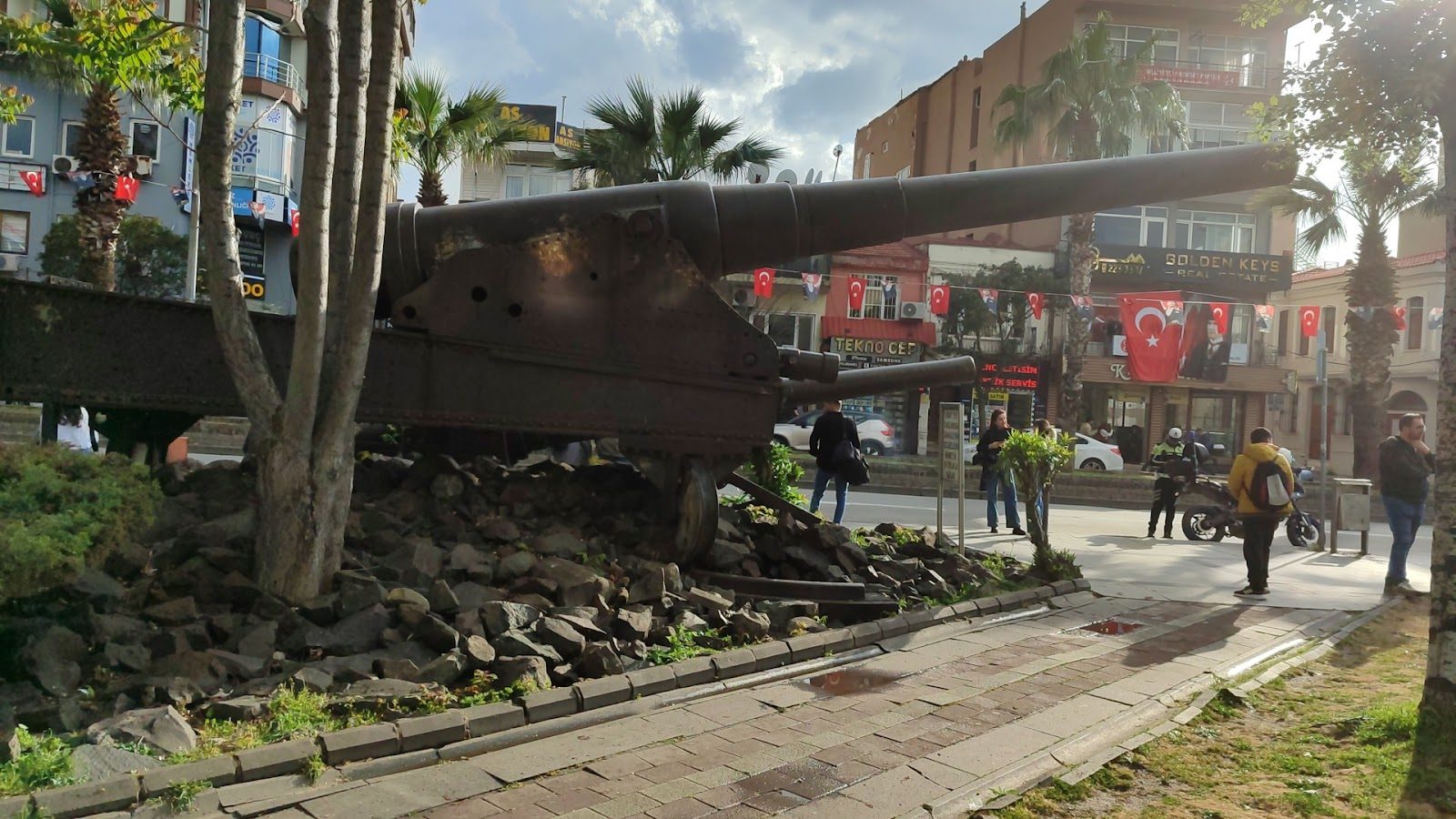
This cannon, used in the Gallipoli Campaign, is an important historical artifact that showcases the intensity of the war and the military technology of the era.
Story
The Gallipoli Campaign, fought between 1915 and 1916 in the Dardanelles Strait and on the Gallipoli Peninsula between the Ottoman Empire and the Allied Powers, is one of the bloodiest and most significant wars in history. The cannons used in this war played a critical role in both naval and land battles. Especially the heavy artillery used in the defense of the strait achieved great success in preventing the Allied navies from passing through. These cannons were generally manufactured by leading arms producers of the time, such as German Krupp and British Vickers, and varied in different calibers and ranges. In land battles, field guns and howitzers were more commonly used, proving effective in trench warfare and infantry support fire. The cannons used in the Gallipoli Campaign were produced within the technological capabilities of that period but required continuous maintenance and repair under the harsh conditions of the war. These cannons, which changed the course of the war, combined with the courage and strategic genius of the Turkish soldiers, inscribed the phrase 'Çanakkale is Impassable' into history. This cannon, exhibited today, serves as a living monument reminding us of the brutality and heroism of the war.
Visit Tips
- Visit the museum or memorial area where the cannon is located.
- Plan to see other remnants and memorials of the war.
- Join guided tours to learn more about the cannon and the war.
- Find the right time and angle for taking photographs.
- Consider visiting other museums and martyrs' cemeteries related to the Gallipoli Campaign.