
 Powered by Google
Description
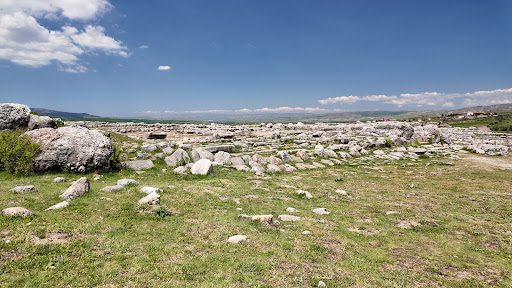
Hattusa, the capital of the Hittite Empire, is an important archaeological site listed as a UNESCO World Heritage Site.
Story
Hattusa is an ancient city that served as the capital of the Hittite Empire from the 17th to the 13th century BCE, located within the borders of the Boğazkale district of present-day Çorum province. The city became the political, religious, and cultural center of the Hittites thanks to its strategic location, natural defensive advantages, and fertile lands. Although the first traces of settlement in Hattusa date back to the 6th millennium BCE, its true importance was gained during the Hittite period. The city's most brilliant period coincides with the 14th and 13th centuries BCE. During this period, Hattusa became a magnificent capital with its monumental walls, temples, palaces, and royal archives. Structures such as the Great Temple, the Yazılıkaya Open-Air Temple, and the Lion Gate, and the King's Gate, represent the pinnacle of Hittite architecture and art. The city was destroyed and abandoned around 1200 BCE, as a result of the Sea Peoples' migrations and internal conflicts. The remains of Hattusa have been brought to light by excavations carried out since the late 19th century. Cuneiform tablets discovered by Hugo Winckler, in particular, have provided invaluable information for understanding Hittite history, law, religion, and diplomatic relations. Among these tablets is the first written treaty in history...
Visit Tips
- It is recommended to allocate at least half a day to visit the archaeological site.
- Since it covers a large area, prefer comfortable walking shoes.
- Especially in summer, it is important to have a hat, sunscreen, and plenty of water.
- Be sure to visit the Yazılıkaya Open-Air Temple, which is one of the most impressive points of Hattusa.
- You can learn more about the Hittites by visiting the museum at the entrance of the archaeological site.