
 Powered by Google
Description
Pamukkale Nature Park is a unique area where natural and cultural heritage merge, famous for its travertine terraces and the ancient city of Hierapolis.
Story
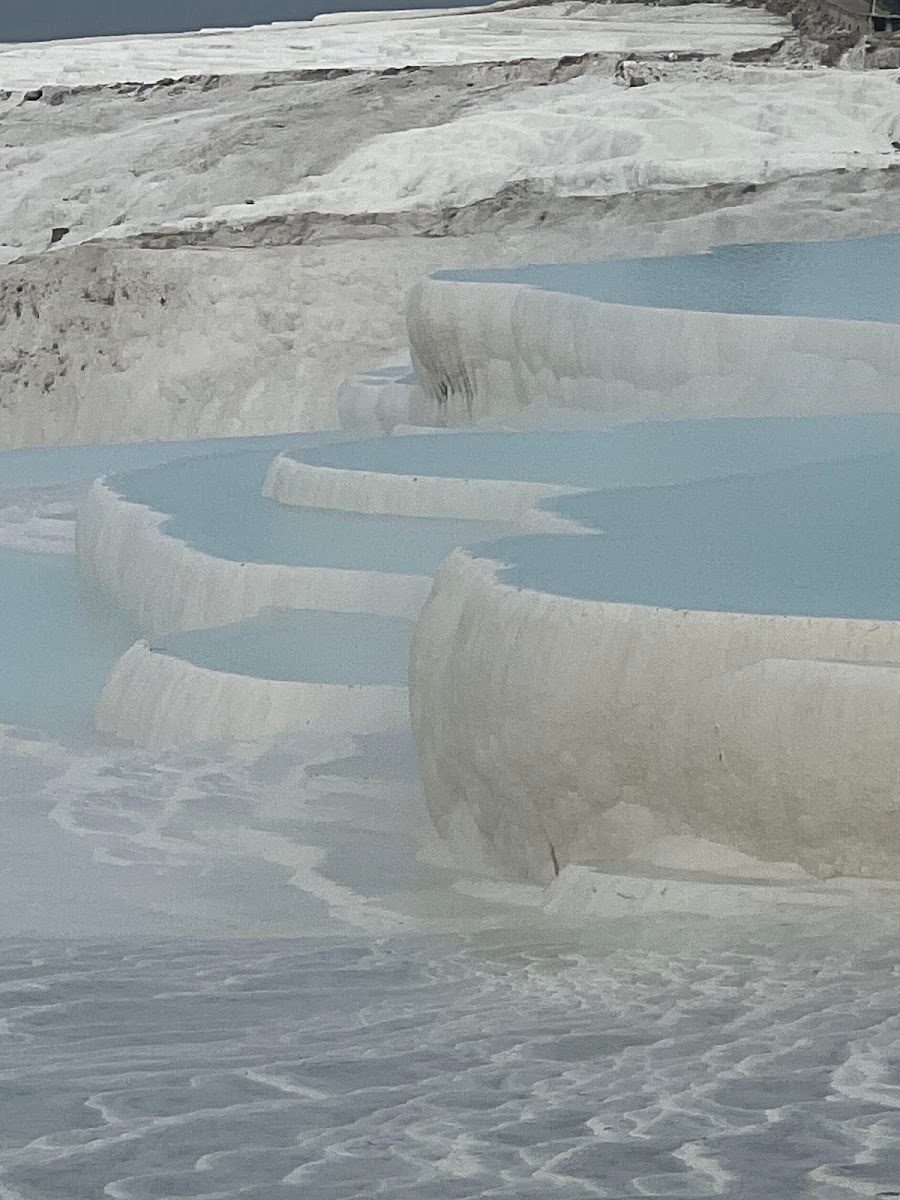
Pamukkale Nature Park, located within the provincial borders of Denizli, is a globally recognized natural beauty with its dazzling white travertine terraces formed by thermal waters. These unique geological formations have been created over thousands of years by the precipitation of calcium carbonate contained in thermal waters. The waters, emerging from underground at a temperature of approximately 35°C, flow down the slope, depositing their minerals and forming stepped pools and stalactite-like structures. These natural formations have given Pamukkale its name, meaning 'cotton castle'. These waters, believed to be curative since ancient times, also paved the way for the establishment of an important ancient city like Hierapolis in its vicinity. Hierapolis functioned as an important thermal health center during the Roman period, offering visitors both natural beauty and the opportunity for healing. Pamukkale and the ancient city of Hierapolis were inscribed on the UNESCO World Heritage List in 1988 under both natural and cultural criteria. This highlights the universal value of the area and its importance for preservation. The nature park attracts attention not only with its travertines but also with its rich biodiversity and endemic vegetation.
Visit Tips
- Walk barefoot on the travertines, but be careful as they can be slippery.
- Explore the historical ruins by visiting the ancient city of Hierapolis.
- Experience swimming in the ancient pool, but note that it comes with an additional fee.
- Don't forget to bring essentials like sunscreen, a hat, and water, especially during summer months.
- Wait for sunset or sunrise to see the color changes of Pamukkale at different times of the day.