
 Powered by Google
Description
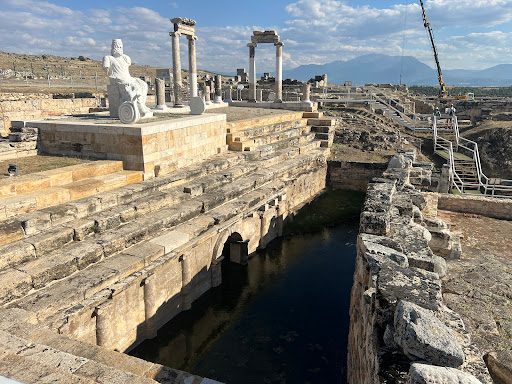
Pluto's Gate is a cave entrance located in the ancient city of Hierapolis, holding mythological and geological significance.
Story
Pluto's Gate, found in the ancient city of Hierapolis, was known in antiquity as the Gate of Pluto, a structure of great mythological and geological importance. This gate was considered a passage to the underworld in ancient times. The poisonous gases (carbon dioxide) emanating from inside the cave were interpreted by ancient people as the breath of Pluto. These gases caused small animals and birds entering the cave to die instantly. Ancient writers Strabo and Cassius Dio described in detail the mysterious and deadly properties of this gate. Strabo stated that the vapors emerging from the cave were so dense that every living creature entering it died instantly, and only castrated priests could enter with special rituals. Around the gate, there were temples and ritual areas dedicated to the gods. During the Christian period, this gate was seen as a symbol of pagan beliefs, and its importance diminished. The structure was built during the Roman period and maintained its popularity, especially during the reign of Emperor Augustus. Archaeological excavations have unearthed many votive offerings and statue fragments around the gate. The gate is one of the sacred areas of Hierapolis...
Visit Tips
- Be sure to see Pluto's Gate when visiting the ancient city of Hierapolis.
- Pay attention to the warning signs at the cave entrance and do not attempt to enter; poisonous gases are still active.
- Don't forget to visit other important structures of the ancient city (theater, agora, necropolis).
- Bring water and comfortable walking shoes, as the area is quite extensive.
- It is recommended to use a hat and sunscreen on sunny days.