
 Powered by Google
Description
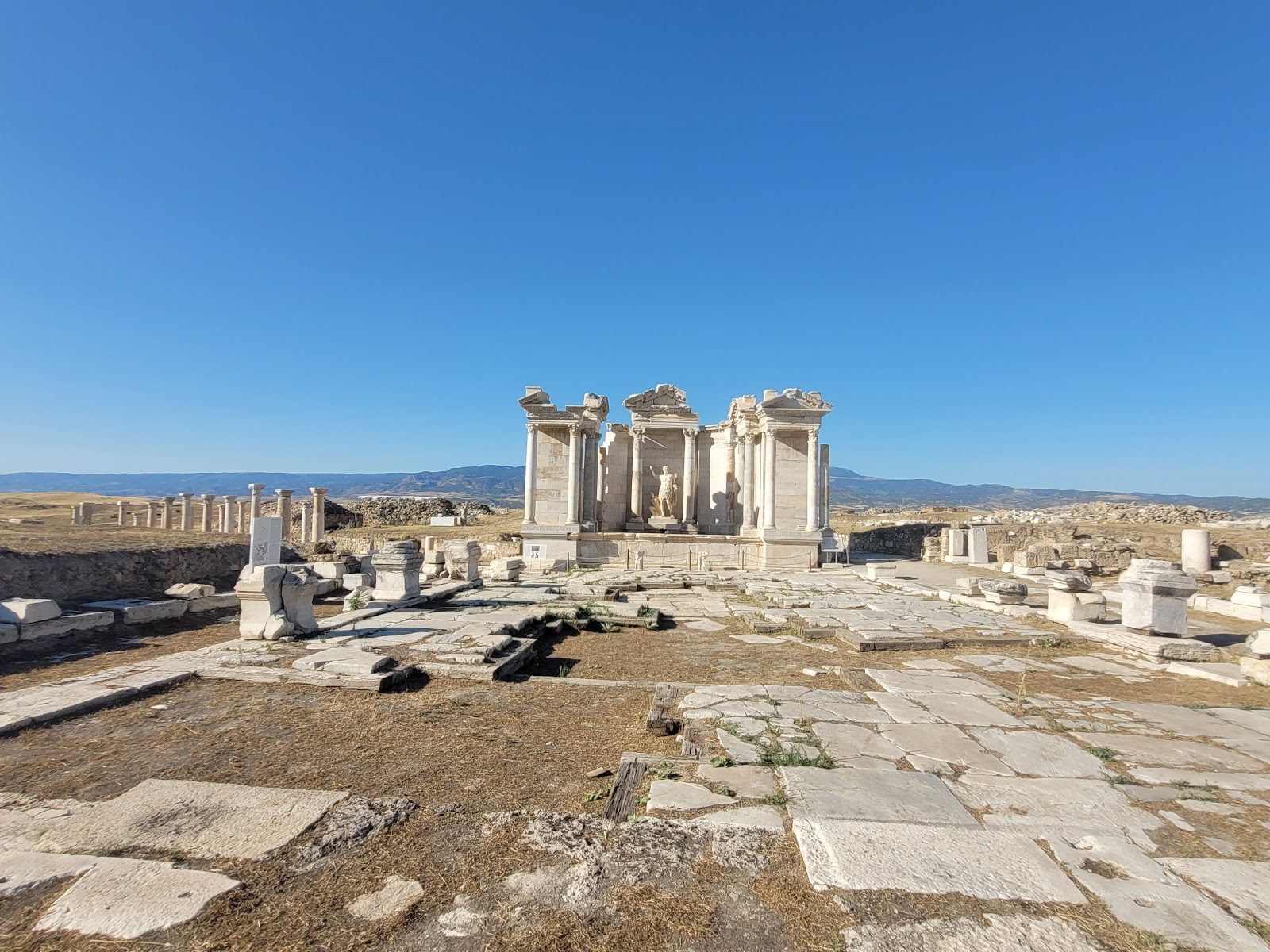
A monumental fountain structure located in the ancient city of Hierapolis, dedicated to Emperor Trajan.
Story
The Trajan Nymphaeum, one of the significant structures of the ancient city of Hierapolis, is located on the city's main street, north of the agora. This monumental fountain, believed to have been built in the early 3rd century AD, was dedicated to the Roman Emperor Trajan. The structure features a two-story facade and is notable for its rich architectural decorations and sculptures. On the front facade of the Nymphaeum, sculptures placed within niches depicted mythological figures and members of the imperial family. Some of these sculptures have survived to the present day and are exhibited in the Hierapolis Archaeology Museum. The fountain was part of the main water system that supplied water to the city and also served as an important meeting point in the city's social life. The large pool in the center of the structure served both an aesthetic and a practical function. Local stones such as marble and travertine were used in the construction of the Nymphaeum. The architecture of the structure bears the typical characteristics of the Roman-era monumental fountain tradition. Although largely destroyed due to earthquakes and deterioration over time, significant information about the structure's original splendor has been obtained through restoration efforts. The Trajan Nymphaeum is an important example of Hierapolis's water management...
Visit Tips
- Be sure to see the Trajan Nymphaeum when visiting the ancient city of Hierapolis.
- Take your time to examine the detailed architectural decorations and sculptures of the structure.
- Follow the main street (Cardo Maximus) where the Nymphaeum is located to discover other important structures.
- Don't forget to use a hat and sunscreen on sunny days, as the area is open and shaded areas are limited.
- You can visit the Hierapolis Archaeology Museum to see the sculptures and other artifacts found from the Nymphaeum.