
 Powered by Google
Description
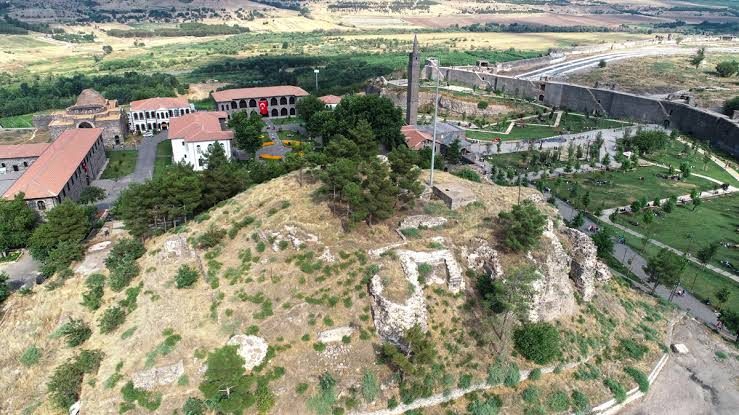
Amida Mound, located in the Sur district of Diyarbakır, is an important archaeological site containing thousands of years of historical layers.
Story
Amida Mound is a multi-layered settlement located in the center of Diyarbakır, on the west bank of the Tigris River, in today's İçkale (Inner Castle) region. The mound bears traces of continuous settlement from the 7th millennium BC. It contains cultural layers belonging to the Neolithic, Chalcolithic, Early Bronze, Middle Bronze, Late Bronze, Iron Ages, Hellenistic, Roman, Byzantine, Artuqid, Akkoyunlu, and Ottoman periods. This rich stratigraphy offers a unique resource for understanding the historical development of the region. The mound was particularly influenced by great civilizations such as Assyrian, Hurrian-Mitanni, and Urartian, and changed hands many times due to its strategic location. Amida, an important border city during the Roman Empire, maintained its strategic importance during the Byzantine period. With the Islamic conquests, Arab culture spread to the region, and during the Artuqid period, the city became an important center of science and culture. Excavations on the mound have unearthed architectural remains, ceramics, coins, and other small finds from these different periods. The fact that the Diyarbakır City Walls and the İçkale were built on the mound demonstrates the central role this area played throughout history.
Visit Tips
- Since the mound is located within Diyarbakır İçkale, you can also visit other historical structures in İçkale.
- Choose appropriate times to observe the excavation areas; work usually intensifies during the summer months.
- It is recommended to wear comfortable shoes when visiting the area, as the mound and its surroundings can be uneven.
- You can see artifacts from the mound by visiting the Diyarbakır Archaeology Museum.
- Guided tours can provide more in-depth information about the historical and archaeological significance of the mound.