
 Powered by Google
Description
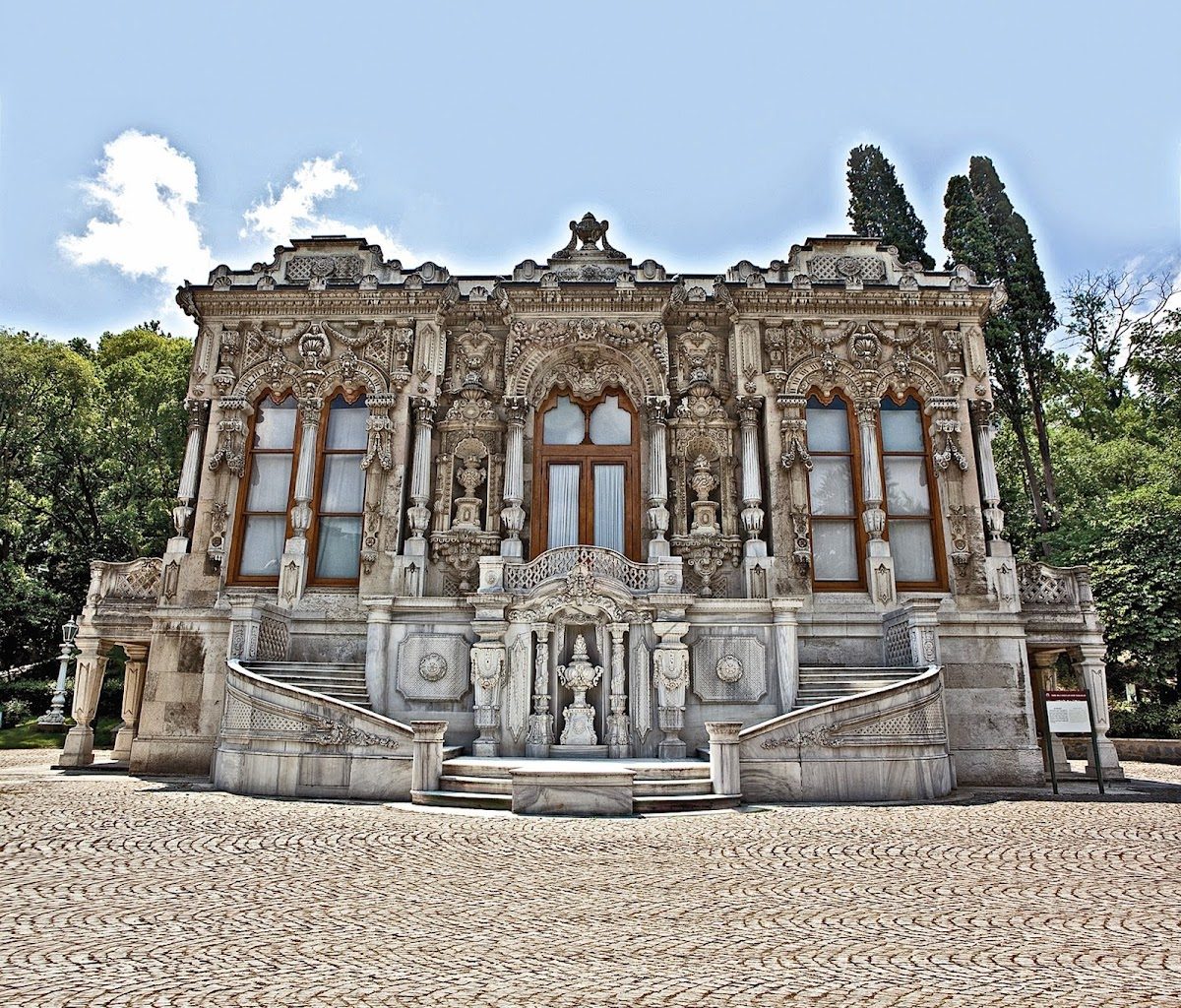
An Ottoman resting pavilion built during the reign of Abdülmecid, featuring elegant Baroque lines.
Story
Ihlamur Pavilion, built between 1849–1855 during the reign of Ottoman Sultan Abdülmecid, is a dazzling relaxation complex featuring one of the city's most elegant Baroque styles. The Ihlamur Valley, where the pavilion is located, was one of the hunting and picnic areas for sultans during the Ottoman period. Abdülmecid chose the Balyan family's architecture to transform this area into a more organized and aesthetic palace garden, resulting in two main structures: the Ceremonial Pavilion (Merasim Köşkü) and the Retinue Pavilion (Maiyet Köşkü). The exterior of the Ceremonial Pavilion strongly reflects the Western influences of the period with its carved stone details, reliefs, and Baroque curves. The interior is enriched with crystal chandeliers, European-style furniture, gold leaf details, and high-ceilinged decorations. The Retinue Pavilion is a simpler structure designed for the sultan's close entourage. The pavilion was not only a resting place for sultans but also a meeting point for literary and cultural figures of the period. Names like Namık Kemal and Abdülhak Hamid Tarhan are known to have spent time here. Throughout the 20th century, the pavilion underwent various restorations and was opened to visitors in 1987 as a museum-palace. Today, Ihlamur Pavilion, with its lush gardens, pools, elegant pavilions, and aesthetically pleasing structure suitable for photography, is a favorite stop for both history and nature lovers.
Visit Tips
- There is an entrance fee.
- The garden is quieter on weekdays.
- Morning hours are ideal for photography.
- It is located close to the Beşiktaş–Nişantaşı line.