
 Powered by Google
Description
A museum complex housing one of the world's largest and richest archaeological collections.
Story
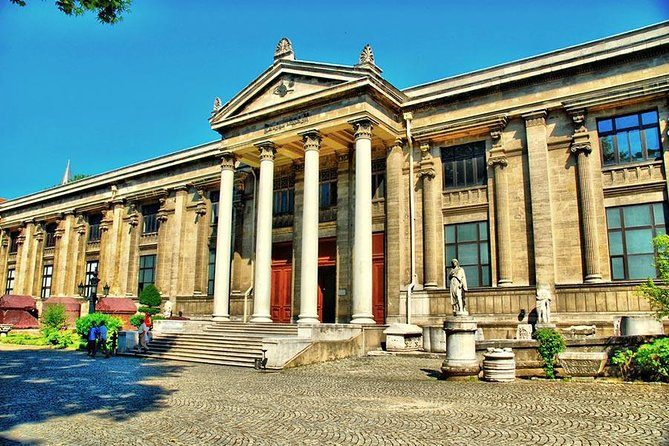
Established in 1891 under the leadership of Osman Hamdi Bey, the Istanbul Archaeological Museums became a symbol of the Ottoman Empire's commitment to scientific archaeology. In its early years, the museum grew by collecting artifacts unearthed from excavations within Ottoman territories, quickly becoming a respected cultural center not only in the region but worldwide. Today, it consists of three main sections: the Archaeological Museum, the Museum of the Ancient Orient, and the Tiled Kiosk Museum. The Archaeological Museum's collection includes world-renowned artifacts such as the Sarcophagus of Alexander. This sarcophagus was discovered during excavations in the Royal Necropolis of Sidon and brought to Istanbul; the level of detail in its reliefs is almost unparalleled in the ancient world. The Museum of the Ancient Orient houses tablets, cuneiform documents, reliefs, and much more, belonging to the civilizations of Mesopotamia, Anatolia, Egypt, and the Arabian Peninsula. Artifacts from the Babylonian and Assyrian periods, in particular, hold extraordinary importance as historical documents. The Tiled Kiosk, built by Fatih Sultan Mehmet in 1472, reflects the pinnacle of Ottoman tile art. The museum complex is unique not only for its rich collection but also for its ability to bring together Istanbul's historical layers. The artifacts gathered in this city, which hosted different empires for centuries, reveal the cultural transitions and shared heritage of human history. Today, the museums serve as an important resource for both local and international researchers and a cultural treasure offering millions of visitors the opportunity to directly connect with the past.
Visit Tips
- Closed on Mondays.
- There might be a ticket queue during peak seasons; online tickets are recommended.
- It is calmer in the early mornings.
- Admission is charged.