
 Powered by Google
Description
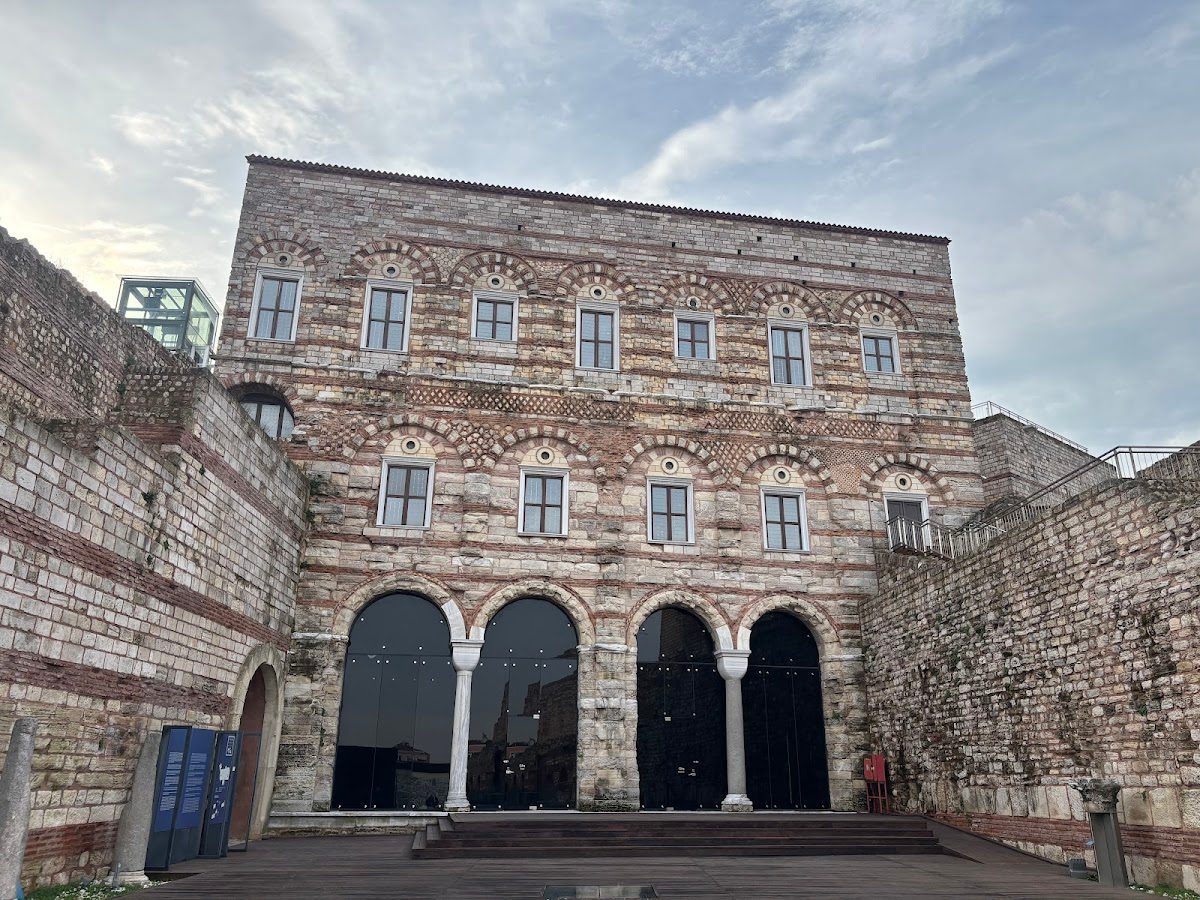
One of the rare palace structures belonging to the late Byzantine period, known for its mosaic façade.
Story
Tekfur Palace is one of the most important palace structures from the Byzantine period that has survived to the present day in Istanbul, and one of the rare examples of late Byzantine architecture that has endured over time. Believed to have been built in the 12th century, the palace was part of the Blachernae Palace Complex. Although other parts of this complex, used as the residence of Byzantine emperors, have not survived to this day, the three-story structure of Tekfur Palace, its characteristic brick and stone masonry, arched windows, and unique façade decorations can still be seen today. While the interior of the palace is completely ruined, its exterior façade reflects the colorful stone-brick techniques of the Middle Byzantine period. During the Ottoman period, the structure remained empty for a while, and in the 18th century, it was converted into a tile production workshop. Some of the tiles manufactured here were used in Topkapi Palace and other important structures of that era. The palace courtyard was also used as a zoo, where exotic animals were displayed. Over time, the structure was largely worn out due to earthquakes, fires, and neglect, remaining dilapidated for a long time. Restoration efforts that began in the late 20th century strengthened it and transformed it into a modern museum. Today, Tekfur Palace serves as a museum, presenting Byzantine palace life, the tile production process, and the changing appearance of the historical peninsula to visitors through various exhibitions.
Visit Tips
- Admission is charged.
- May be closed on Mondays, check visiting hours.
- Weekday mornings are generally quieter.
- Within walking distance of Edirnekapı stop.