
 Powered by Google
Description
Topkapı Palace, which served as the administrative center of the Ottoman Empire for approximately 400 years, attracts attention with its unique collections and architecture.
Story
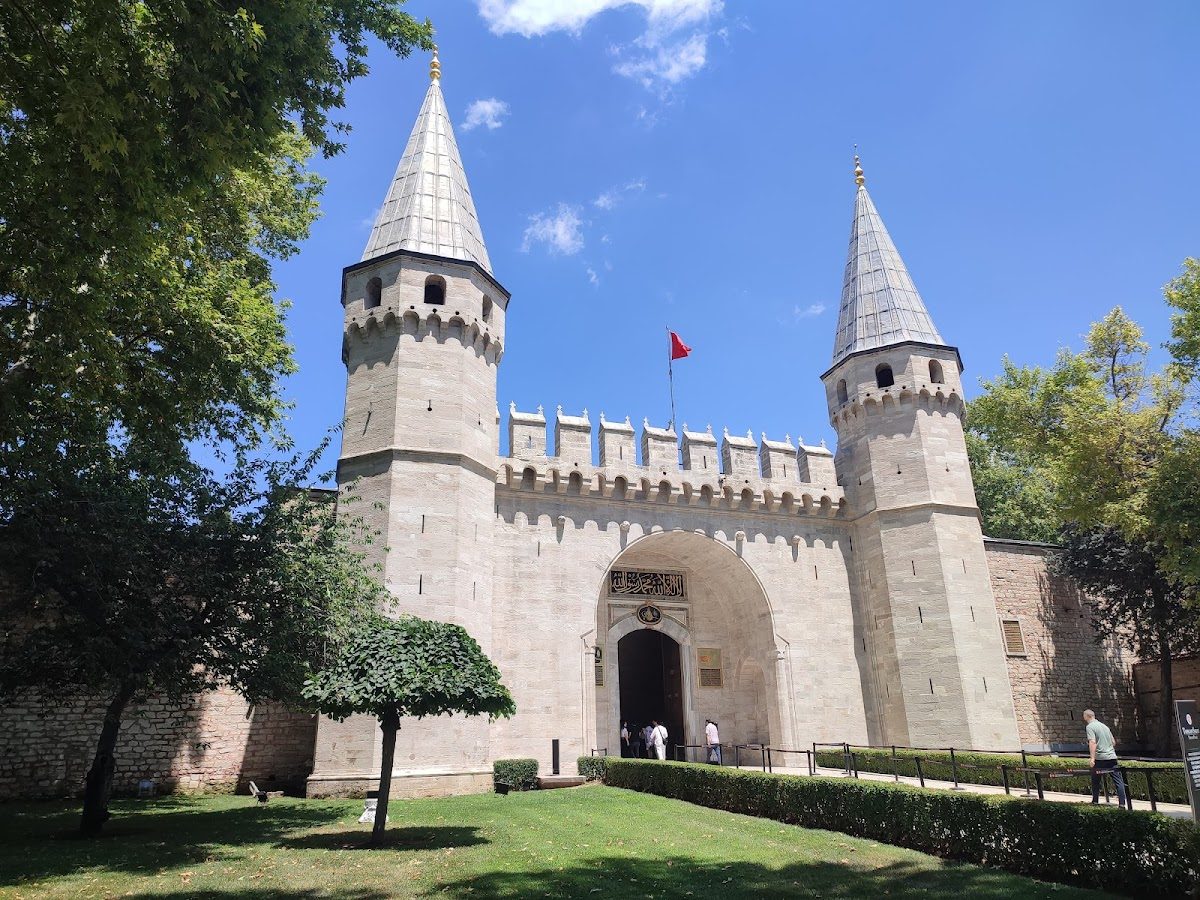
Topkapı Palace is a unique palace complex whose construction began in 1460 by the order of Fatih Sultan Mehmet shortly after the conquest of Istanbul, and which served as the administrative, ceremonial, and educational center of the Ottoman Empire for approximately 400 years. Spanning over 700,000 square meters with four courtyards and numerous structures, the palace is considered one of the most impressive palaces not only in Ottoman architecture but also in world history. The Harem section, Babüssaade, Bab-ı Hümayun, Kubbealtı, Enderun dormitories, the chamber of holy relics, and the palace's extensive gardens have been areas where state affairs were conducted and the imperial families lived for centuries. Topkapı Palace was also the center where the Ottoman state governance system was most elaborately applied and developed. Divan meetings, the sultan's private audiences, reception of ambassadors, and military decisions took shape in this palace. Although the sultans' residence changed with the construction of Dolmabahçe Palace in the 19th century, Topkapı Palace did not lose its importance; state archives and treasures continued to be preserved here. Converted into a museum in 1924, the palace became the first museum of the Republic of Turkey. Today, the exhibited holy relics, Ottoman treasury, sultan's armors, gold-embroidered thrones, the Spoonmaker's Diamond, and one of the world's most valuable collections of daggers and jewelry further solidify the palace's international reputation. Hosting millions of visitors every year, Topkapı Palace continues to thrive as one of the most powerful structures forming Istanbul's historical memory. The palace is regarded as one of humanity's most important cultural assets, both for the splendor of its architecture and the depth of the historical heritage it preserves.
Visit Tips
- Entrance is paid; the Harem section requires a separate ticket.
- It is closed on Mondays.
- Early morning hours are the most suitable time.
- Ticket queues can be long during peak season.