
 Powered by Google
Description
One of Ionia's largest Roman settlements, which hosted the Temple of Artemis, one of the Seven Wonders of the Ancient World.
Story
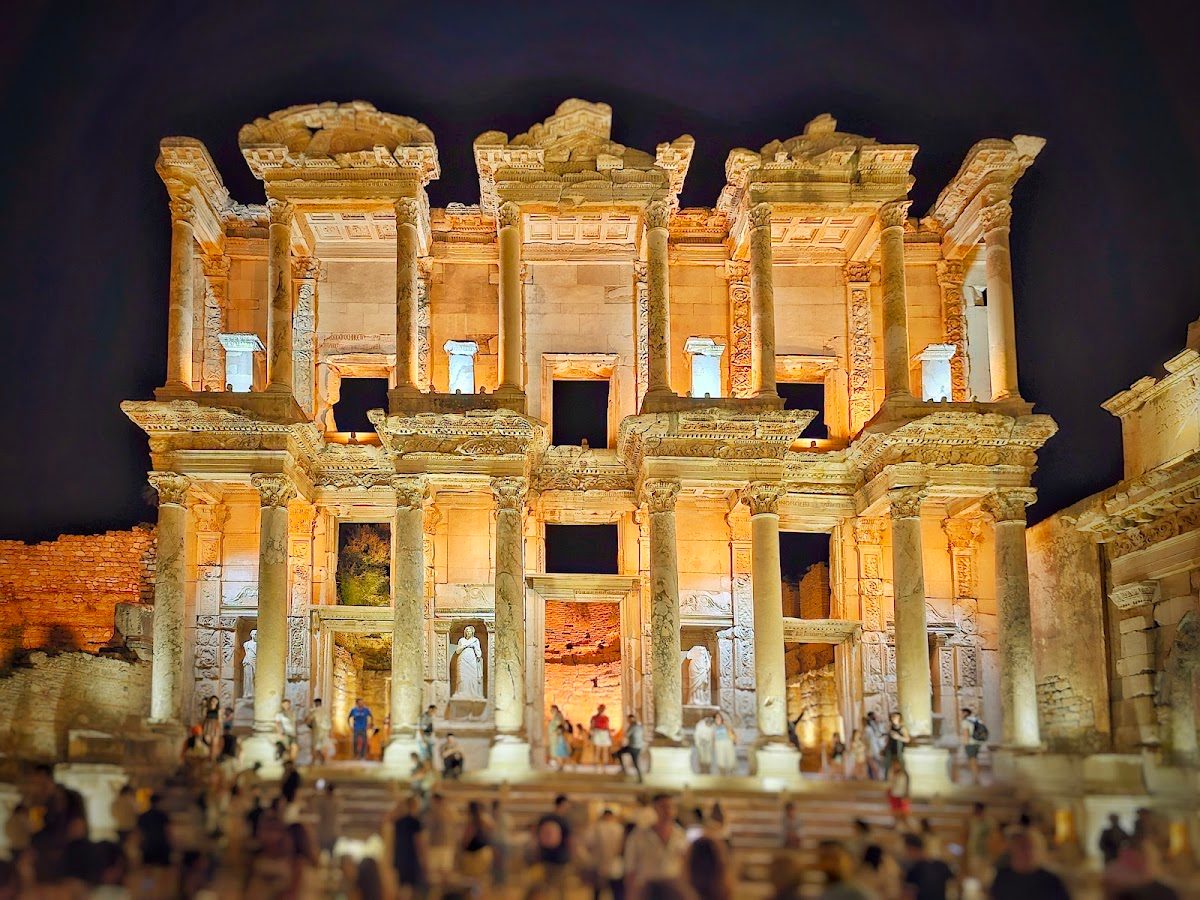
Ephesus Ancient City was established in a location close to the delta of the Küçük Menderes River, and has been an important port city and religious center since ancient times. The city's history dates back to 6000 BCE, and it experienced its most brilliant period, especially in the 7th century BCE, among the Ionian city-states. Ephesus became famous for hosting the **Temple of Artemis** (one of the Seven Wonders of the Ancient World), and this temple attracted pilgrims from all over the Mediterranean. Even after the temple's destruction, Ephesus was rebuilt during the Roman Empire period (1st and 2nd centuries CE), becoming the capital of the Asian province, and its population reached 200,000. Among the most magnificent structures remaining from Roman-era Ephesus are the three-story **Celsus Library**, which housed hundreds of thousands of manuscript scrolls, the **Great Theater** with a capacity of 25,000 people (where Saint Paul preached), the terrace houses (mosaic-adorned residences of wealthy Roman citizens), and **Curetes Street**. The city also played a key role in Christian history; one of the seven churches mentioned in the Bible is located here, and it is believed that the Virgin Mary spent her last years here. Over time, the silting of Ephesus's harbor and its distance from the sea led to the city losing its commercial and strategic importance. The city shrank during the Byzantine period and was completely abandoned during the Seljuk period. Ephesus was included in the UNESCO World Heritage List in 2015. The architectural and artistic richness unearthed during excavations provides unique information about the urban planning, architecture, and daily life of the ancient world. Ephesus proves that İzmir is not only the trade center of the Aegean but also a cornerstone of thousands of years of Western civilization.
Visit Tips
- Ephesus is very large; visit early in the morning or late in the afternoon during summer months.
- Be sure to see the Celsus Library and the Terrace Houses (extra fee); they best reflect the Roman lifestyle.
- Also add the House of the Virgin Mary and Selçuk Museum, which are close to the Ephesus archaeological site, to your itinerary.
- The walking paths in the area are marble; wear comfortable shoes.