
 Powered by Google
Description
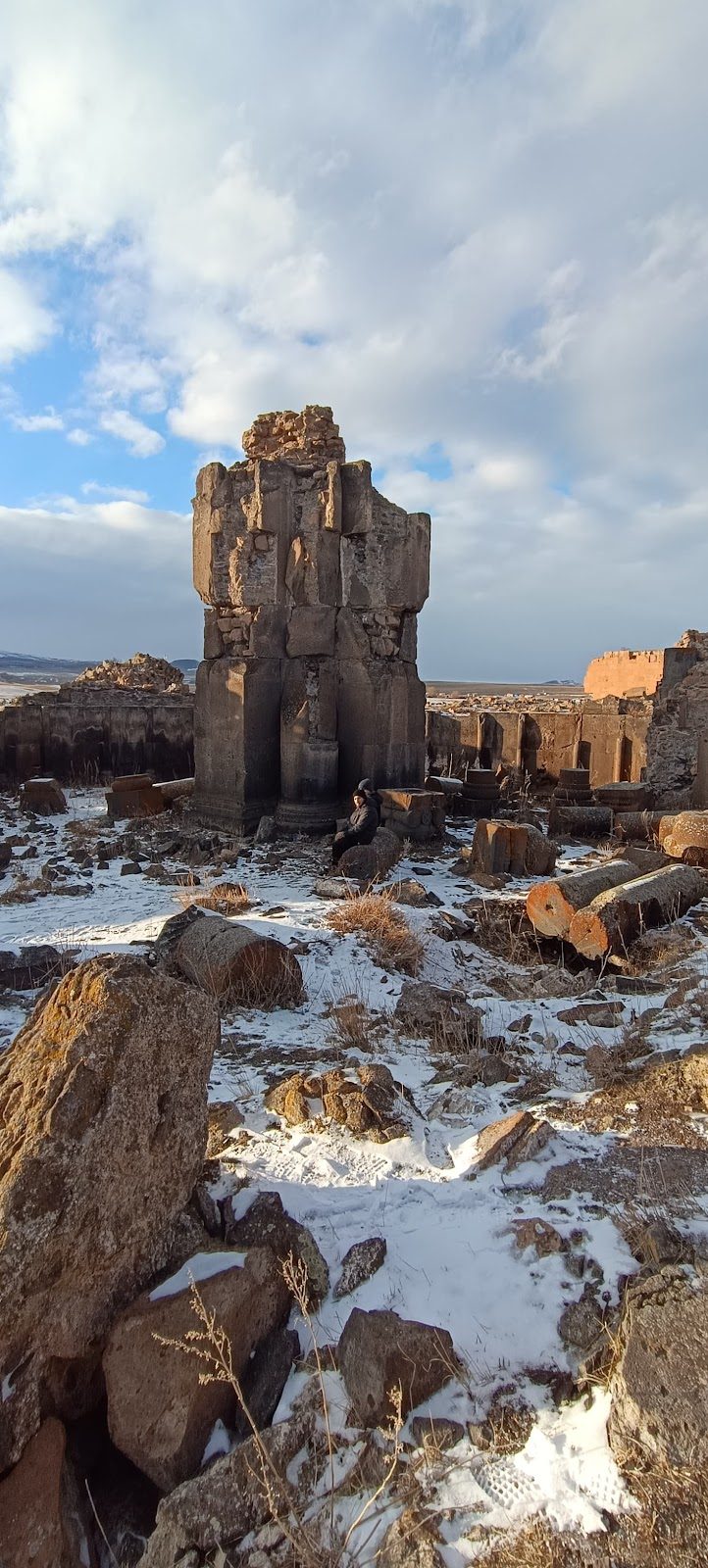
Ani Gagik Church is an impressive ruin within the Ani Ruins, reflecting the unique domed plan of 11th-century Armenian architecture.
Story
Ani Gagik Church stands on a windswept plateau overlooking the Arpaçay valley, within the Ani Ruins about 45 minutes from the center of Kars. Today only the remains of its circular plan are visible, yet in the early 11th century it was one of Ani’s most spectacular monuments. The church was commissioned by King Gagik II of Ani, built by the renowned architect Trdat of the time, and dedicated to Saint Gregory. With its fully circular plan and large dome, the structure clearly differed from classical basilican churches. It is known that the dome interior was once decorated with frescoes, while sculpted reliefs encircled the exterior façade. From the stone traces on the ground and the partially standing foundations, one can still read the presence of a colonnaded gallery that wrapped around the building. This made Gagik Church not only a place of worship but also a focal point for ceremonial processions and religious gatherings. In the 10th and 11th centuries, as Ani became one of the flourishing capitals of the Medieval Armenian Kingdom at the crossroads of trade routes, Gagik Church emerged as a symbol of that prosperity. However, earthquakes, political upheavals, and the gradual abandonment of Ani inflicted heavy damage on the structure. Drawings and photographs from the 19th and 20th centuries show that the dome and upper walls were still standing then; the low ruins visible today represent the final stage of a long period of deterioration. When you approach the church as a visitor, you are greeted first by silence and the sound of the wind. There are no church bells and no city noise; only the wind whistling through the stones and distant birdsong. This atmosphere makes it easy to imagine the time when Ani was known as the “city of a thousand and one churches.” When you step inside, the dome is gone, but the sky fills the void where it once rose; looking up, you see clouds where stone carving used to be. It is worth walking slowly around the remains to perceive the circularity of the plan. The arrangement of the masonry, the wall thicknesses, and the relatively compact interior space reveal how balanced and well-proportioned the design once was. On some stones, faint traces of Armenian inscriptions can still be seen. Weathered by time and climate, they silently testify to Ani’s multilayered history. As you wander around, you sense that the building is not just a ruin, but a product of a bold, experimental phase in Armenian architecture and a symbol of cultural exchange between the Caucasus and Anatolia. Today Ani Gagik Church is one of the important stops within the Ani Archaeological Site, inscribed on the UNESCO World Heritage List. The soft light of morning and late afternoon casts gentle shadows on the remains, highlighting the texture of the stones and creating an elegant atmosphere for photography. A visit here is not simply about looking at a medieval church; it is about rereading Ani’s long story of rise and decline within this simple ring of stone.
Visit Tips
- When visiting the Ani Gagik Church, don't forget to bring water and snacks; you may need energy while walking among the surrounding natural beauties.
- To better see the details of the church's interior architecture, it is recommended to visit during sunrise or sunset; the play of light at these times creates a remarkably impressive atmosphere.
- During your visit, obtaining information from local guides will help you gain in-depth knowledge about the historical and architectural features of the church.
- Don't forget to take photos, but prefer times that are not crowded to show respect to other visitors; this way, you will get better shots and have a more peaceful experience.