
 Powered by Google
Description
The Great Cathedral is a monumental cathedral complex at the heart of the ruins of Ani and is considered one of the most impressive examples of medieval Armenian architecture.
Story
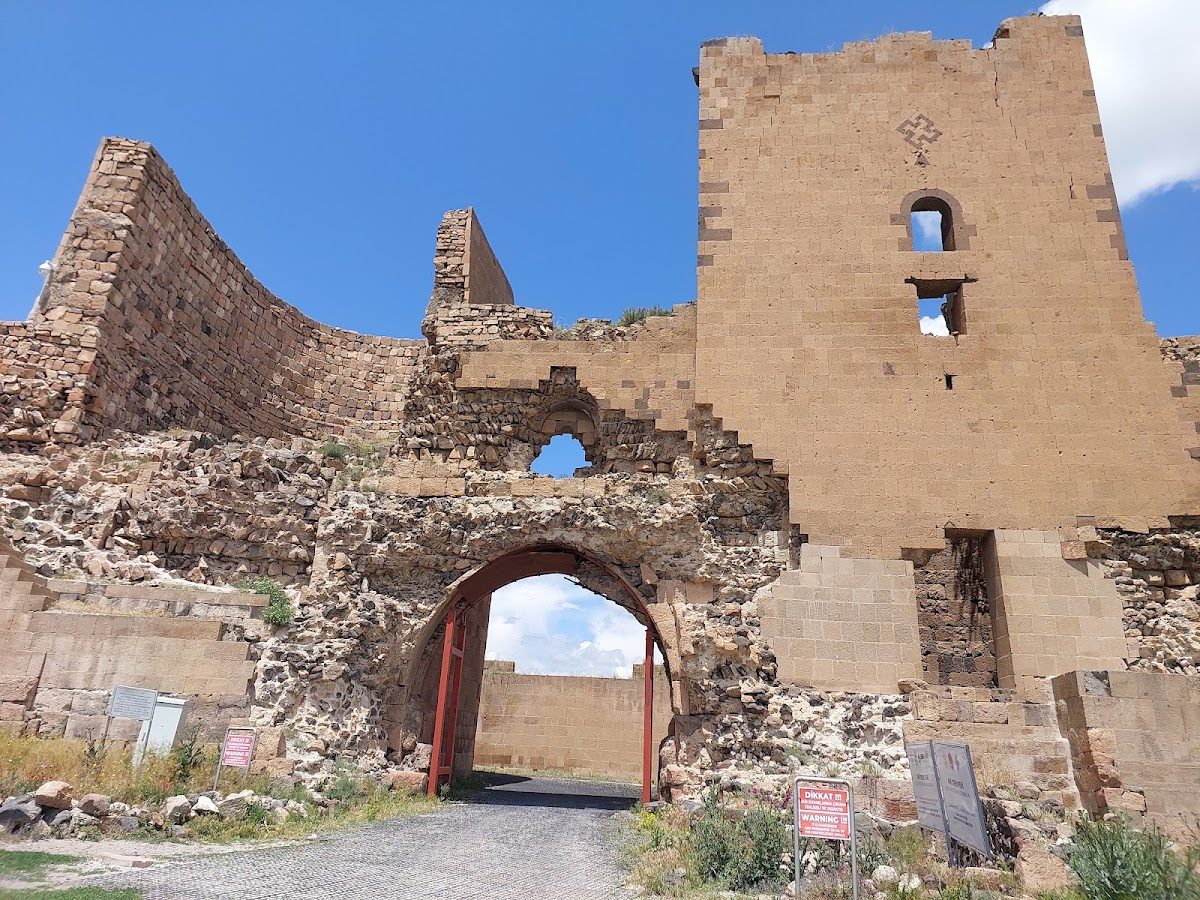
The Great Cathedral (Ani Cathedral Complex) rises on a rugged plateau east of Kars, overlooking the Arpacay valley that now marks the border between Türkiye and Armenia. Standing alone today in the middle of a windy, silent steppe, this structure was once the beating heart of the bustling medieval city of Ani, symbolising both religious and political power. Built in the late 10th century during the Bagratid Kingdom, the cathedral formed one of the central landmarks of Ani’s famous skyline, which gave the city its epithet “the city of a thousand and one churches.” The cathedral is traditionally attributed to the celebrated architect Trdat, known also for restoring the dome of Hagia Sophia. Seen from this angle, the stonework you encounter in Ani carries an architectural language that influenced not only its immediate region but the wider medieval world. The dark volcanic stone walls appear modest and sober from the outside, yet inside, the high vaults, slender arches and careful geometric proportions create an impression of surprising lightness, as if the building were defying gravity. Over time, earthquakes, invasions and shifts in trade routes plunged Ani into silence, but the Great Cathedral still retains the pride of a former capital. When you step inside and stand in the centre of the basilican plan, listening to the wind whistling through empty windows, it is easy to imagine the hymns that once echoed here, the frescoes glowing in candlelight, and the crowds gathered for great liturgies. Light and shadow perform their own play: at different hours of the day, the colour of the stone changes, turning pinkish under the morning sun and taking on copper tones towards sunset. Today, visitors to the cathedral can explore both the broad expanse of the Ani archaeological site and the delicate details hidden within the ruins of this building. The partially collapsed dome, exposed piers and traces of ornament on the walls reveal the richness of medieval Armenian architecture. The quiet atmosphere naturally discourages loud voices; people slow their steps, examining cracks in the stones, cross motifs on the corners of walls and faint traces of inscriptions around the doorways. In winter, under a blanket of snow, the cathedral takes on an entirely different character, dominated by near‑absolute silence broken only by the sound of the wind. In spring and summer, against the yellow tones of the steppe and the silhouette of distant mountains, it becomes a favourite subject for photographers and history enthusiasts alike. More than a mere stone structure, the Great Cathedral is a living witness to Ani’s multilayered history and to a cultural memory that transcends borders and empires.
Visit Tips
- Check the weather before visiting the Büyük Katedral; especially in the winter months, cold temperatures and snowfall can be expected.
- Learning about the entrance fee and visiting hours in advance allows you to use your time more efficiently.
- Don't forget to bring water and snacks with you, as the restaurant options in the area may be limited.
- It is recommended to wear comfortable walking shoes to explore the historical ruins around the cathedral, as walking on the terrain can be challenging.