
 Powered by Google
Description
The Kars Outer Fortress and Redoubt Ruins stretch across the hills encircling the city, preserving the military heritage of both the Ottoman and Russian periods.
Story
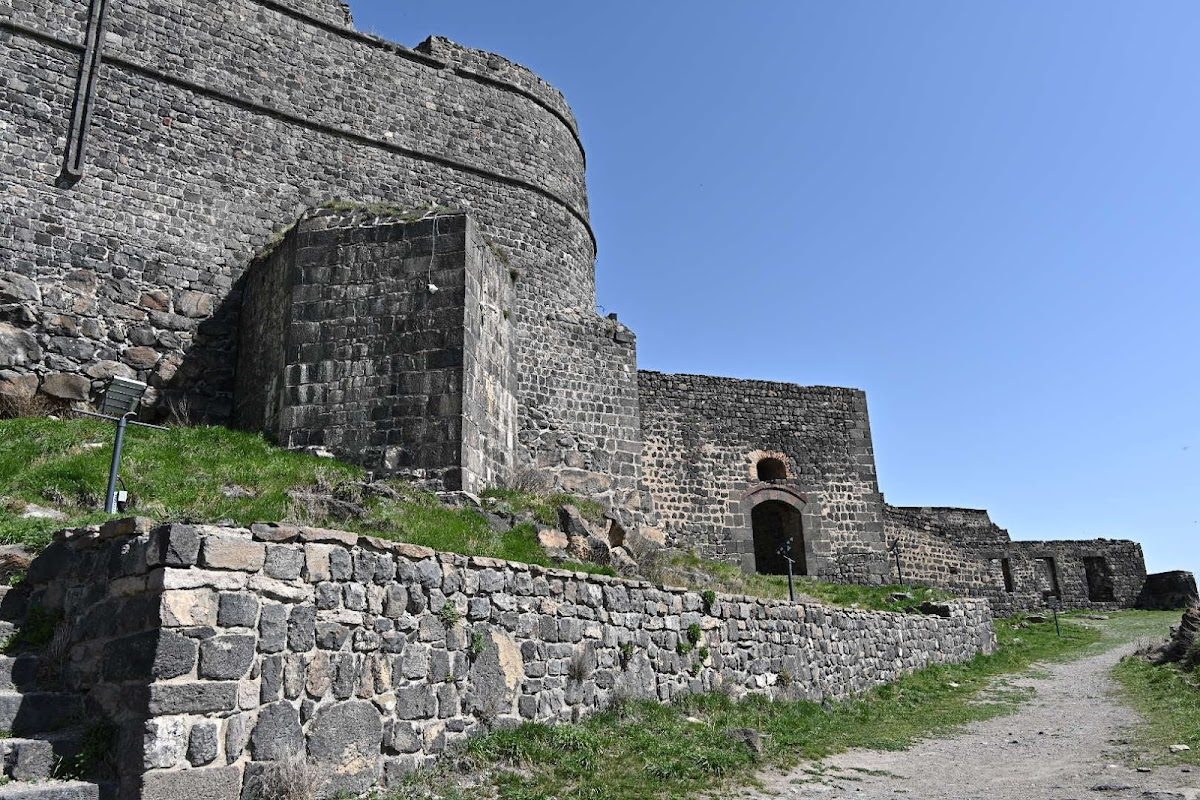
When you lift your head in the center of Kars, you quickly notice the silhouettes of old redoubts lined up along the hills that frame the horizon. The Kars Outer Fortress and Redoubt Ruins may appear today as silent stone walls and artillery positions, yet they are part of a vast stage that tells the turbulent military history of the 19th century. The Ottoman Empire saw Kars as a forward outpost, almost a key city for guarding its eastern frontier; for this reason it built not only the inner castle, but also a ring of outer defensive lines encircling the town. These outer works were at the heart of several conflicts, from the 1828–1829 Russo–Ottoman War to the 1877–1878 Russo–Ottoman War. Controlling the routes towards Sarıkamış, the Ani plain and the Armenian plateaus, the redoubts were placed according to artillery range and designed to remain in visual and supportive contact with one another. Today, when you climb the hills, you can still pick out the embrasures, gun emplacements and the dark entrances of ammunition rooms, sometimes half-buried in grass, sometimes still partly standing. The harsh climate and winds of Kars have eroded the surfaces of the stones, but the overall layout remains legible. In some redoubts, the fortification elements added after the Russian occupation are clearly distinguishable from the Ottoman phase by their stonework and use of brick. This layered structure makes the Kars defense system interesting not only for military history enthusiasts, but also for lovers of architecture and archaeology. Thanks to the wide field of view, you can see the whole city, Kars Castle, the river valley and distant mountain ranges in a single panorama from these positions. For visitors, the experience requires some walking and a bit of background reading. Signage is not always sufficient, so it helps to bring a simple map or use online resources to track which redoubt is where. In summer, the steppe turns yellow and, with sunset, the shadows of the castle and the redoubts grow long; for photographers, the most striking light is usually in the late afternoon. In winter, snow-covered hills and deep silence transform the area into something like a frozen front line. As you wander through the Kars Outer Fortress and Redoubt Ruins, it is worth remembering that you are in an open-air archive. Every stone evokes the footsteps of a sentry, the urgency of an artillery unit, the calculations of an engineer officer. The strong sense of history mingles with the sound of the wind, and you recall that these now quiet hills once hosted strategic vantage points where decisions shaping the fate of empires were made.
Visit Tips
- Before going to Kars Dış Kale, check the weather; as the area can be windy and cold, it is important to dress appropriately.
- While walking around the castle, try to get information from local guides; this way, you can gain a deeper understanding of the historical and cultural context.
- Climb to the highest points of the castle to watch the sunset; the view is truly enchanting and offers a great opportunity for photography.
- Taking into account the suggestions of the local people, don't forget to try the authentic Kars cuisine at the small cafes in the area; especially Kars gruyere and other regional delicacies are quite famous.