
 Powered by Google
Description
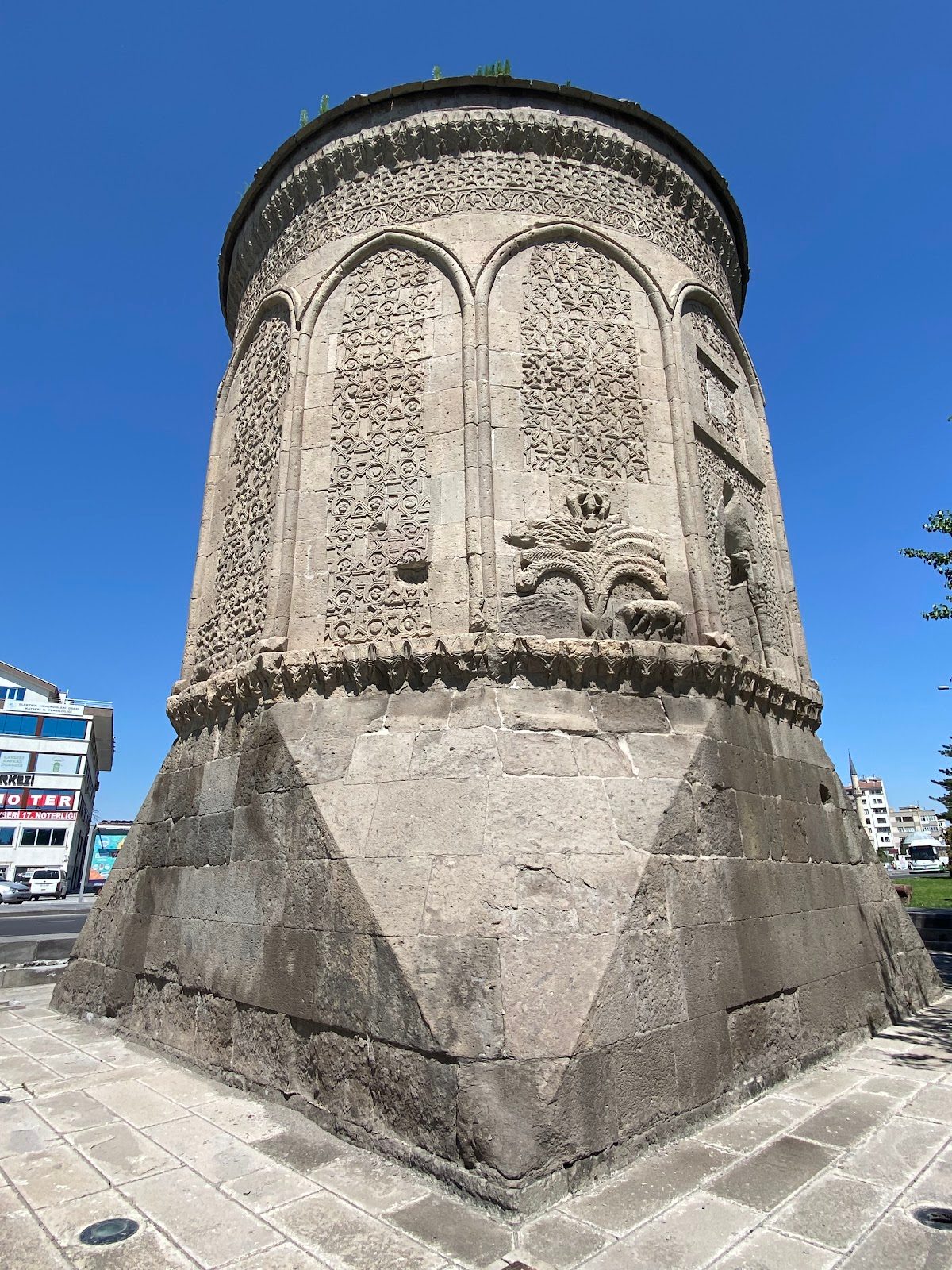
Döner Kümbet is a monumental tomb from the Seljuk period located in Kayseri's Melikgazi district, notable for its architecture and rich stone carvings.
Story
Rising within the historical fabric of Kayseri's Melikgazi district, Döner Kümbet is one of the most elegant and original examples of Anatolian Seljuk architecture. This monumental structure, believed to have been built between 1276 and 1277, is a tomb commissioned for Şah Cihan Hatun, daughter of Alaaddin Keykubat. It gets its name "Döner Kümbet" (Revolving Tomb) from the illusion of rotation created by the shadows cast by its decagonal prismatic body and pyramidal conical roof under sunlight. The architecture of the structure represents the pinnacle of Seljuk period stone craftsmanship. The decagonal exterior facade of the kümbet is adorned with different geometric patterns, floral motifs, and animal figures on each surface. Figures such as the double-headed eagle, lion, and hunting scenes, in particular, strongly reflect the symbolic narrative of Seljuk art. These decorations are not merely aesthetic elements; they also carry the symbols of belief, power, and status of the era. Inside the kümbet, there is a small prayer room where visitors can pray, and beneath it, a basement floor called a mumyalık (crypt) housing the sarcophagus of the deceased. Although the mumyalık section is generally kept simpler, it is an important part of the Seljuk tomb tradition. One of the most striking features of the kümbet is the perfection in its architectural proportions. It reveals how advanced the engineering and mathematical knowledge of its construction period was. For those visiting Kayseri, Döner Kümbet offers a unique opportunity to experience the artistic and cultural depth of Seljuk civilization. Easily accessible due to its central location in the city, this structure captivates both history enthusiasts and those interested in architectural beauty. Currently under protection, Döner Kümbet continues to bear witness to the rich history of Kayseri and Anatolia with its stance defying centuries. This structure serves as a bridge extending from the past to the present, allowing visitors to feel the spirit and artistic aesthetics of the period. The arrangements and information panels around the kümbet help visitors better understand the structure while preserving the historical atmosphere. Beyond being just a tomb, Döner Kümbet maintains its importance as a living monument of Seljuk art and engineering.
Visit Tips
- When visiting the Döner Kümbet, don't forget to take a walk to explore the historical texture surrounding it; the other monuments in the area are also worth seeing.
- If you plan your visit for the morning hours, you can avoid the crowds and have a more peaceful experience.
- Consider bringing binoculars or a good camera with you to better see the architectural details of the tomb.
- By interacting with the local people, you can seize the opportunity to learn more deeply about the history and culture of the region.