
 Powered by Google
Description
Located in Kayseri's Melikgazi district, the Ulu Mosque is one of the significant architectural works of the Danişmendli and Seljuk periods.
Story
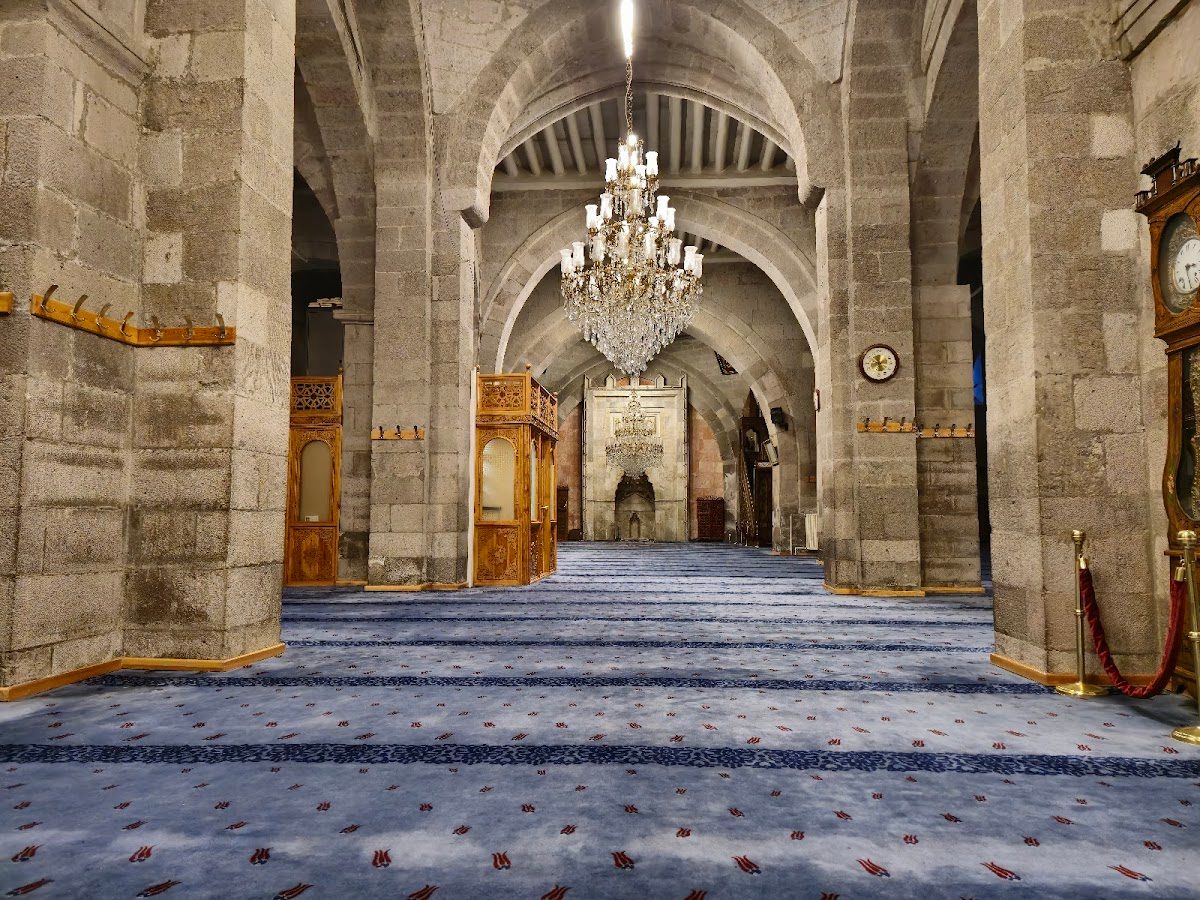
Located in the heart of Kayseri's history-laden Melikgazi district, the Ulu Mosque is one of Anatolia's oldest and most magnificent Turkish-Islamic structures. Believed to have been built in 1135 during the Danişmendli Beylik period by Yağıbasan, the son of Melik Mehmet Gazi, this mosque underwent significant restoration between 1177-1178 by Seljuk Sultan Kılıçarslan II, achieving its current general form. The structure is one of the earliest examples of Seljuk architecture in Anatolia and has played a central role in the region's cultural and religious life for centuries. Its exterior, constructed from regular cut stone, reflects simplicity and solidity, while the interior features a flat-roofed plan supported by wooden columns, a notable characteristic. This architectural style is frequently observed in early Turkish mosque structures, demonstrating a local architectural tradition adapted to Anatolia's challenging climate conditions. One of the mosque's most striking features is its wooden minbar (pulpit), crafted from walnut wood and adorned with geometric patterns and floral motifs. This minbar is considered a masterpiece of Seljuk woodworking and showcases the artistic refinement of its era. The mihrab also draws visitors' attention with its stone masonry and painted decorations. Although the minaret has undergone various repairs over time, it rises in harmony with the mosque's historical fabric. The Ulu Mosque is not merely a place of worship but also a living testament to Kayseri's historical identity and cultural heritage. Upon stepping inside, visitors are greeted by a serene atmosphere where centuries of history and spiritual peace converge. Here, visitors trace the footsteps of the past while also experiencing being a part of the religious and social life of present-day Kayseri residents. The mosque, with its proximity to Kayseri's Covered Bazaar and other historical monuments, is an important stop within the city's rich texture, awaiting exploration. This ancient structure not only offers an architectural feast but also allows visitors to feel the profound traces of the Anatolian Seljuk civilization, opening a window into the city's deeply rooted past.
Visit Tips
- When visiting Ulu Cami, it is advisable to go early in the morning; this way, you can enjoy a more peaceful experience away from the crowds.
- It may be helpful to bring a magnifying glass with you to see the detailed stone craftsmanship inside the mosque; this will allow you to better appreciate the architectural richness.
- Don't forget to stroll around the historic bazaar surrounding the mosque; you can find local handicrafts and souvenirs.
- If you do a brief research to learn about the history of the mosque before your visit, you can better understand the significance of the interior.